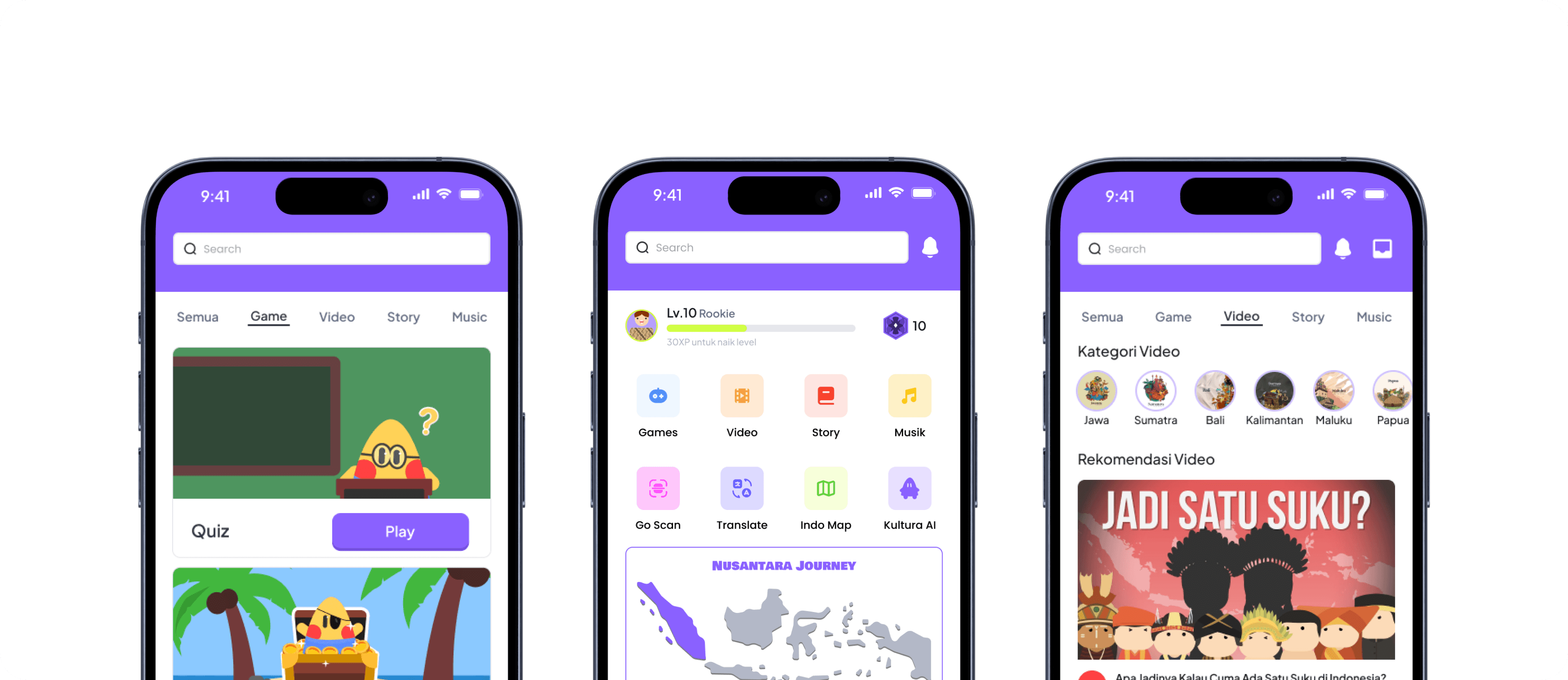
Kultura - Preserving Culture through Interactive Learning
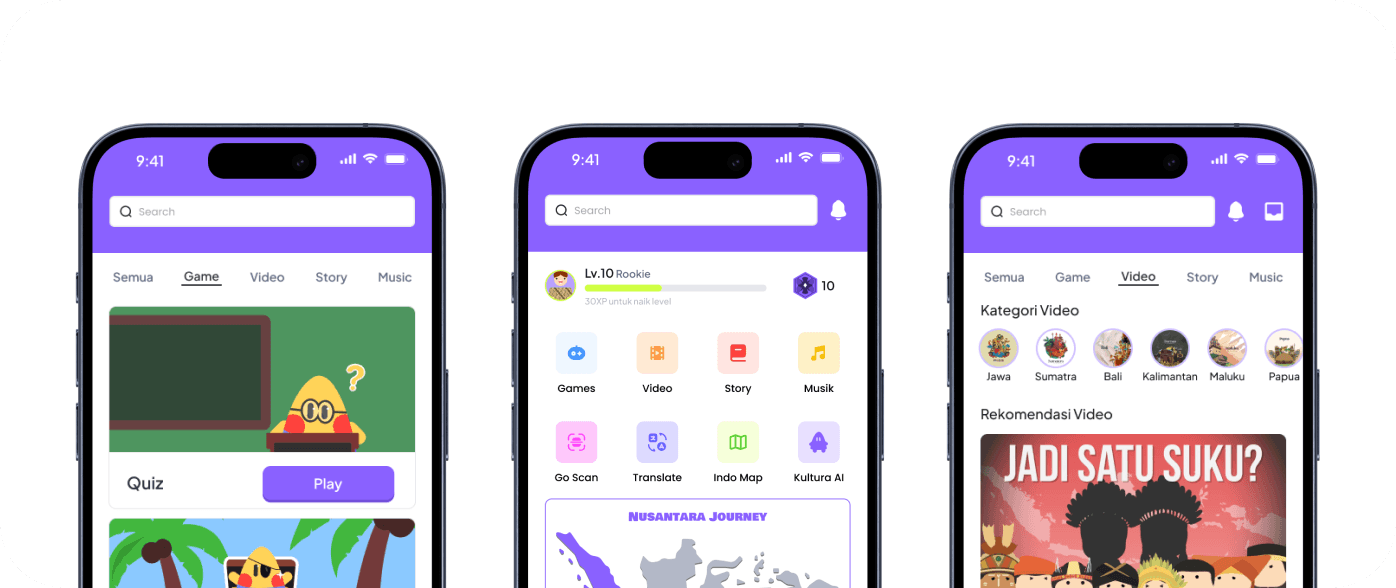
Kultura is an application that helps children or teenagers to be enthusiastic about learning culture with parental control. This application also has various unique features such as: games, videos, stories, etc. This application will help children and teenagers enthusiastic about learning Indonesian culture.
Role
Role
UI/UX Designer
Industries
Industries
Education


Date
Date
January 2025
Software Used
Software Used
Figma
Overview
Why We Build Kultura?
We created Kultura because the competition caught our attention, not only as a platform to show our UI/UX skills, but also because of its challenging theme. Culture is often perceived as “old” and less appealing to the younger generation, so we wanted to prove that with the right design approach, culture can be fun, interactive, and relevant. Moreover, it was a chance for us to innovate, combine technology with cultural education, and-of course-challenge ourselves in a prestigious competition like ICOMFEST 2025.
Team And Role
As a core team member, I played a significant role in conceptualizing, designing, and refining Kultura. My key contributions included:
User Research & Persona Development: Ensuring our solution was data-driven and user-focused.
UI/UX Design Execution: Leading the interface design process to ensure aesthetic and functional consistency.
Presentation & Strategy: Showcasing our work in a compelling manner during the competition.
This project honed my skills in digital design, collaboration, and strategic problem-solving, further strengthening my expertise in creating impactful user experiences.
Research
Problem Statement
Many Indonesian children are less interested in learning about Indonesian culture because the learning methods seem boring and not in line with their interests. They are more often exposed to foreign cultures that look more attractive through media and technology. This can reduce the love and pride for local culture.
Research Methods
In the research process for Kultura, we applied the method of secondary research and surveys to dig deep insights into how users - especially the younger generation - interact with local culture in the digital era.
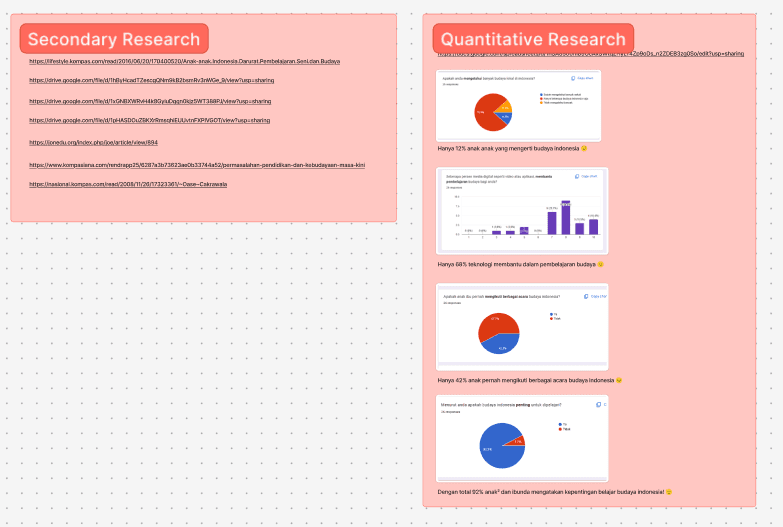
As an active collaborating team member, I contributed to crafting targeted research questions, analyzing findings from interviews and surveys, and designing data-driven solutions that truly address user needs. This approach not only improved Kultura's design quality, but also made the user experience more up-close and personalized, in line with the principle of human-centered design.
Key Findings
73% of users have difficulty finding local cultural events.
62% of cultural communities feel they have no digital space to showcase their work.
40% of users with disabilities experience barriers in navigating cultural platforms.
Obstacles to be Solved
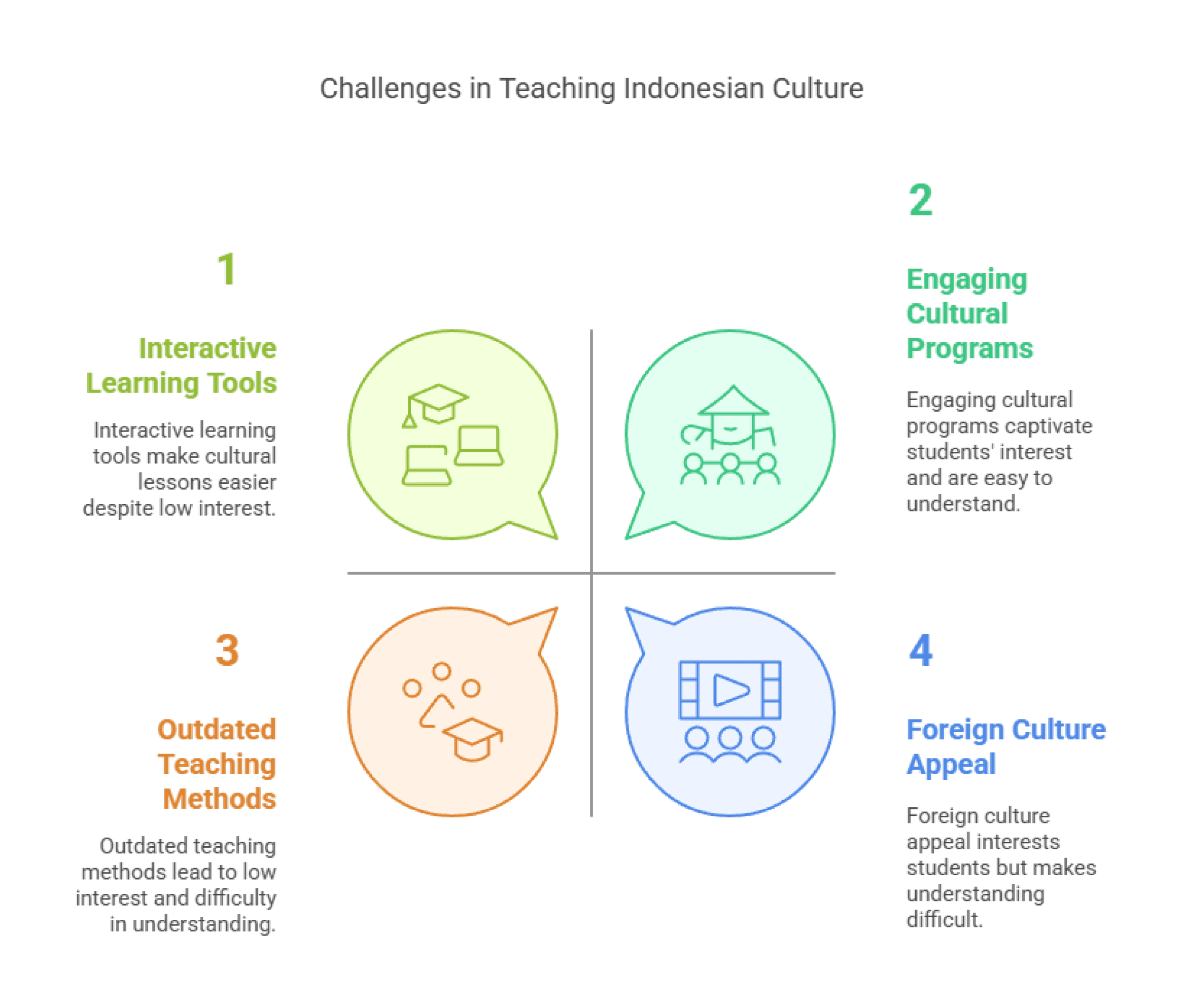
After identifying these pain points, the next step is to design a solution that is more engaging and relevant to students. I will discuss further to develop a cultural learning platform solution to make it more engaging to increase their interest and understanding.
Next steps to overcome cultural education challenges
In the process of identifying pain points, I contributed to formulating the main challenges faced by children in understanding and appreciating local culture. Some of the “How Might We” questions I found highlighted children's difficulties in accessing fun educational apps, limited time in using gadgets. By understanding these issues, we can explore targeted solutions to increase children's interest in Indonesian culture in a more modern way that suits their learning patterns.
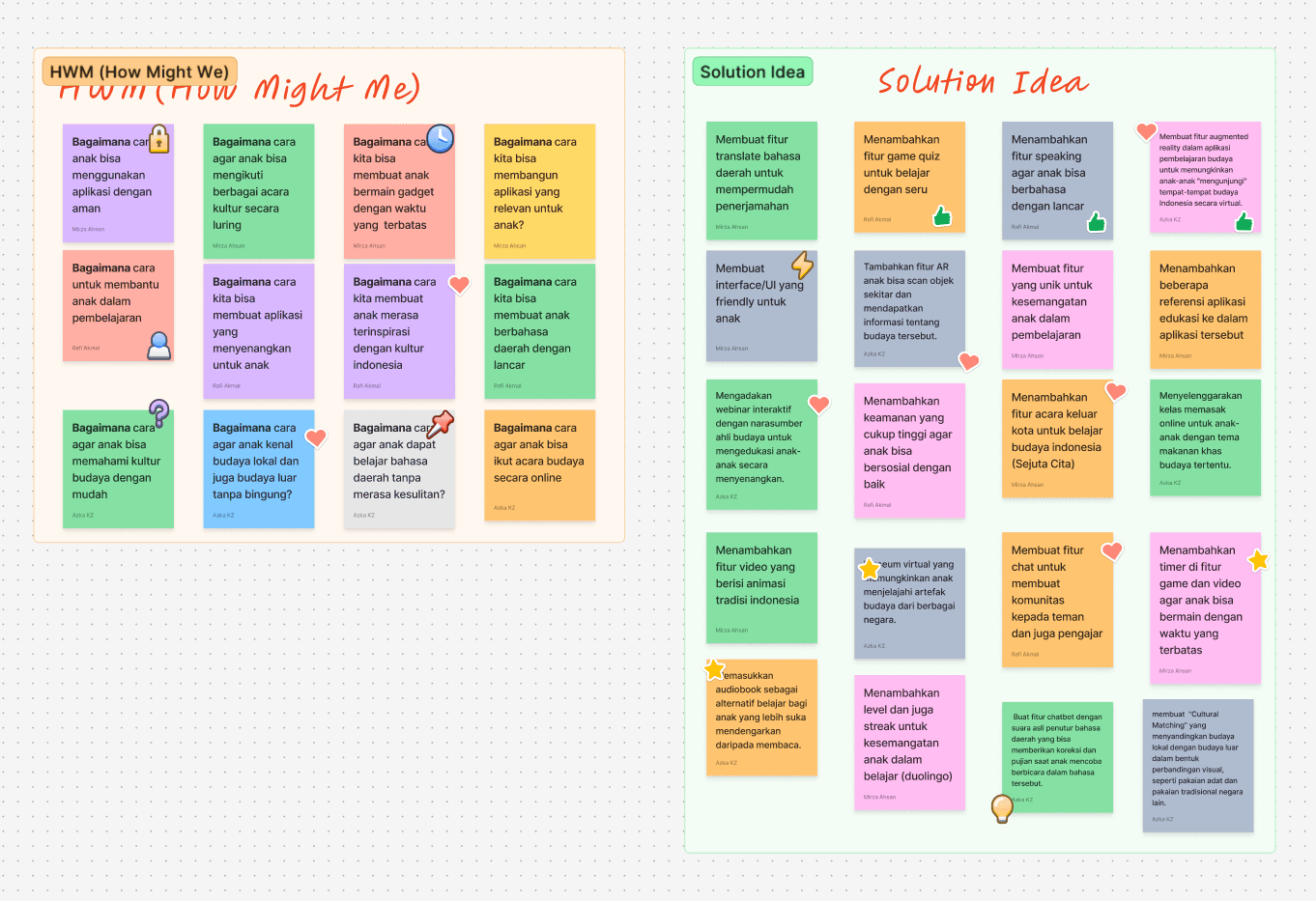
Based on these pain points, the next step is to develop a solution that is not only effective but also engaging for users. Some of the ideas that have been designed include augmented reality features for immersive cultural exploration, gamification in the form of quizzes and daily streaks, as well as interactive features such as animated videos and webinars with cultural experts. I also contributed in designing digital safety features for children to learn and socialize safely. With a Design Thinking-based approach, we will enter into prototyping and early testing stages to ensure the developed solution really answers user needs optimally.
Ideation
Steps to realize the solution
Finally, we managed to design top features for Kultura, specifically designed to be relevant and engaging for children. We have discussed this feature and it will be very helpful for children and teenagers to be more motivated in learning Indonesian culture.
Translator
Game
Traditional Music
Folktale
Heritage Scan
Video
Explore Indonesia
Kultura AI
Creating the user flow
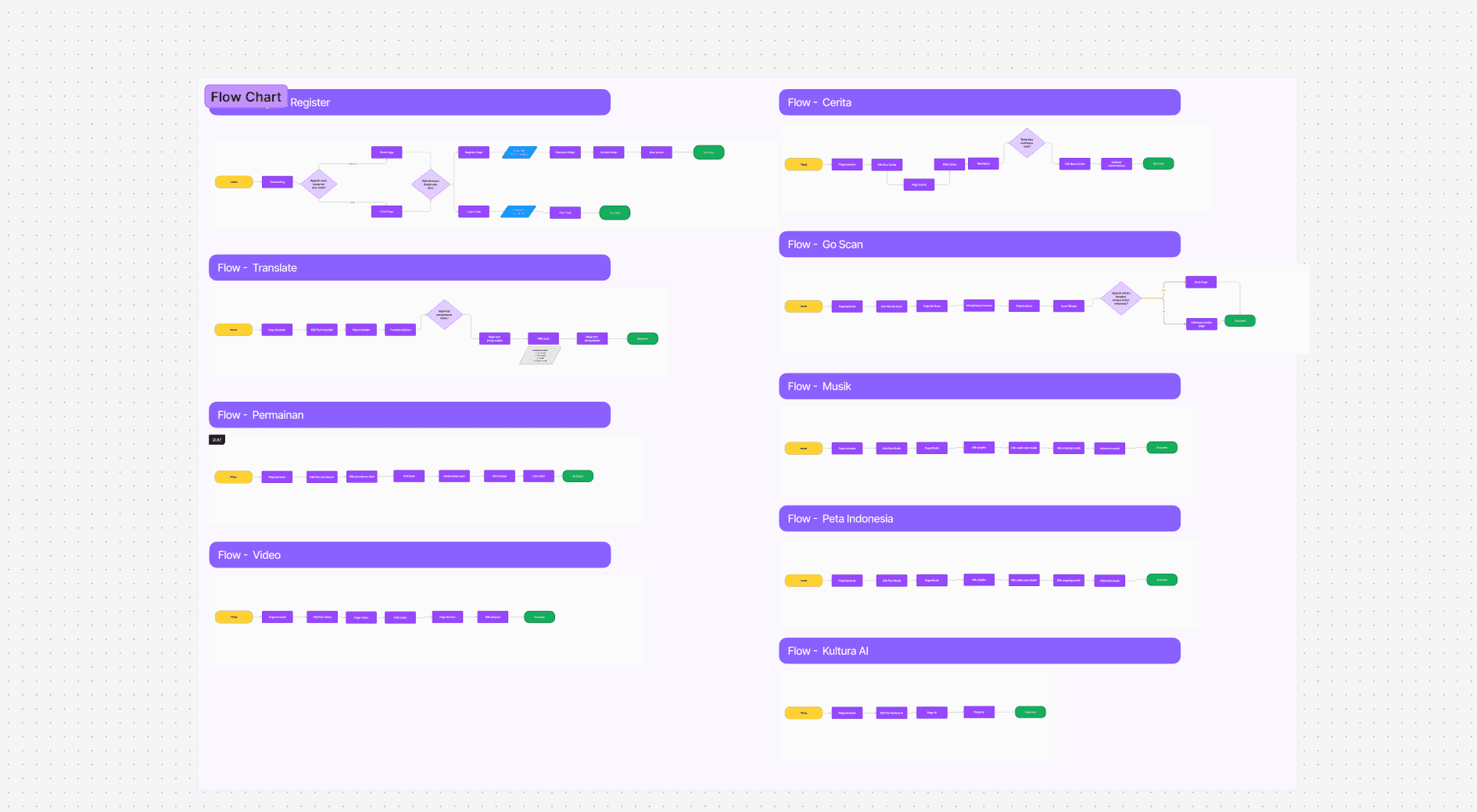
After designing the features, the next step was to develop a user flow to ensure a smooth user experience. The user flow helps us map out how children will interact with the app, from opening the app, selecting features, to achieving key objectives such as learning local languages, exploring cultural stories, or playing interactive games.
Design
Wireframe
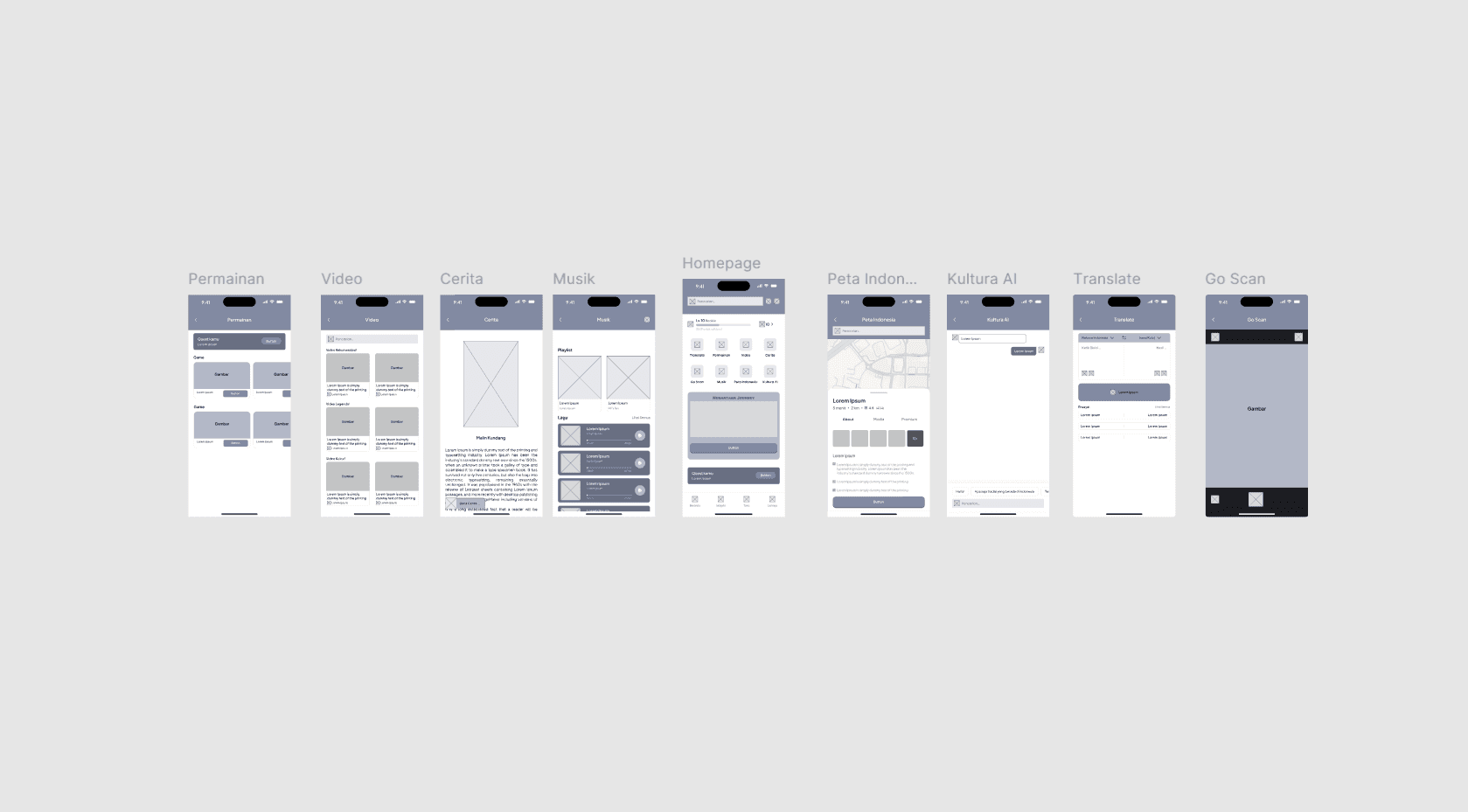
I collaborated with the team to structure the entire digital experience, designing a comprehensive framework that connects the homepage with our core educational features: Cultural Interpreter, Folklore Center, and Heritage Scan. During this process, I was responsible for refining the user flows that guided the development of our wireframes, ensuring each feature truly met user needs and created intuitive pathways. My contributions helped turn abstract concepts into concrete user journeys that formed the foundation of our final design.
High-Fidelity Design
I collaborated on creating high-fidelity designs for our cultural education platform, transforming wireframes into polished, interactive experiences. Working in Figma, I developed detailed designs for key sections including the game interface, traditional music player, video display, login page, homepage, and folktale hub.
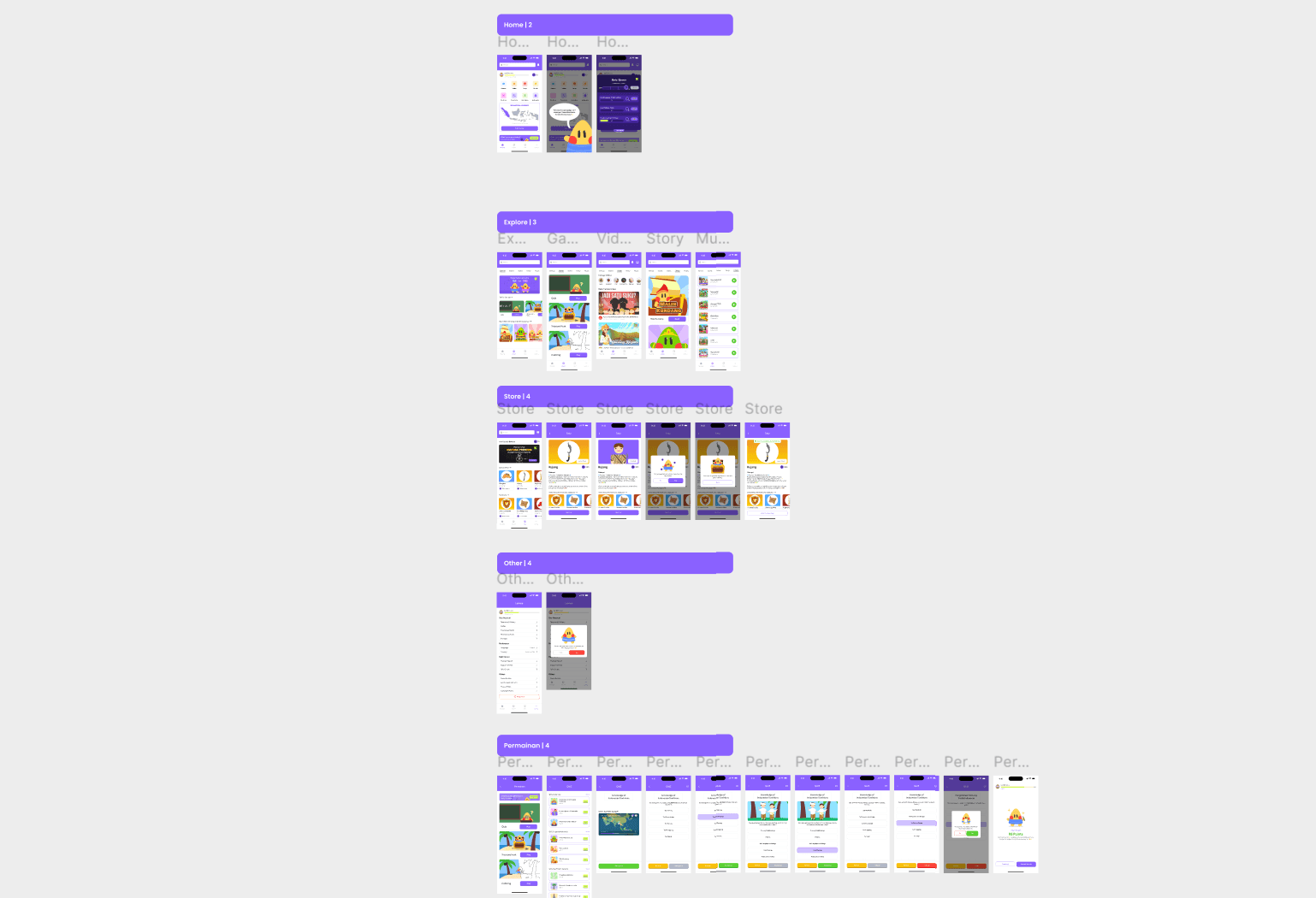
I implemented our design system to maintain visual consistency while preserving each cultural element's unique character. Managing my time effectively was challenging, especially when balancing complex game components with simpler pages. I focused on prioritizing key user touchpoints and making cultural elements both accessible and engaging. The final designs successfully blended traditional cultural elements with modern digital interactions, creating an intuitive platform that respects heritage while being accessible to today's users.
Core Features
Based on the research, the platform features several key features designed to enhance users productivity without compromising their social experience:
1. Homepage
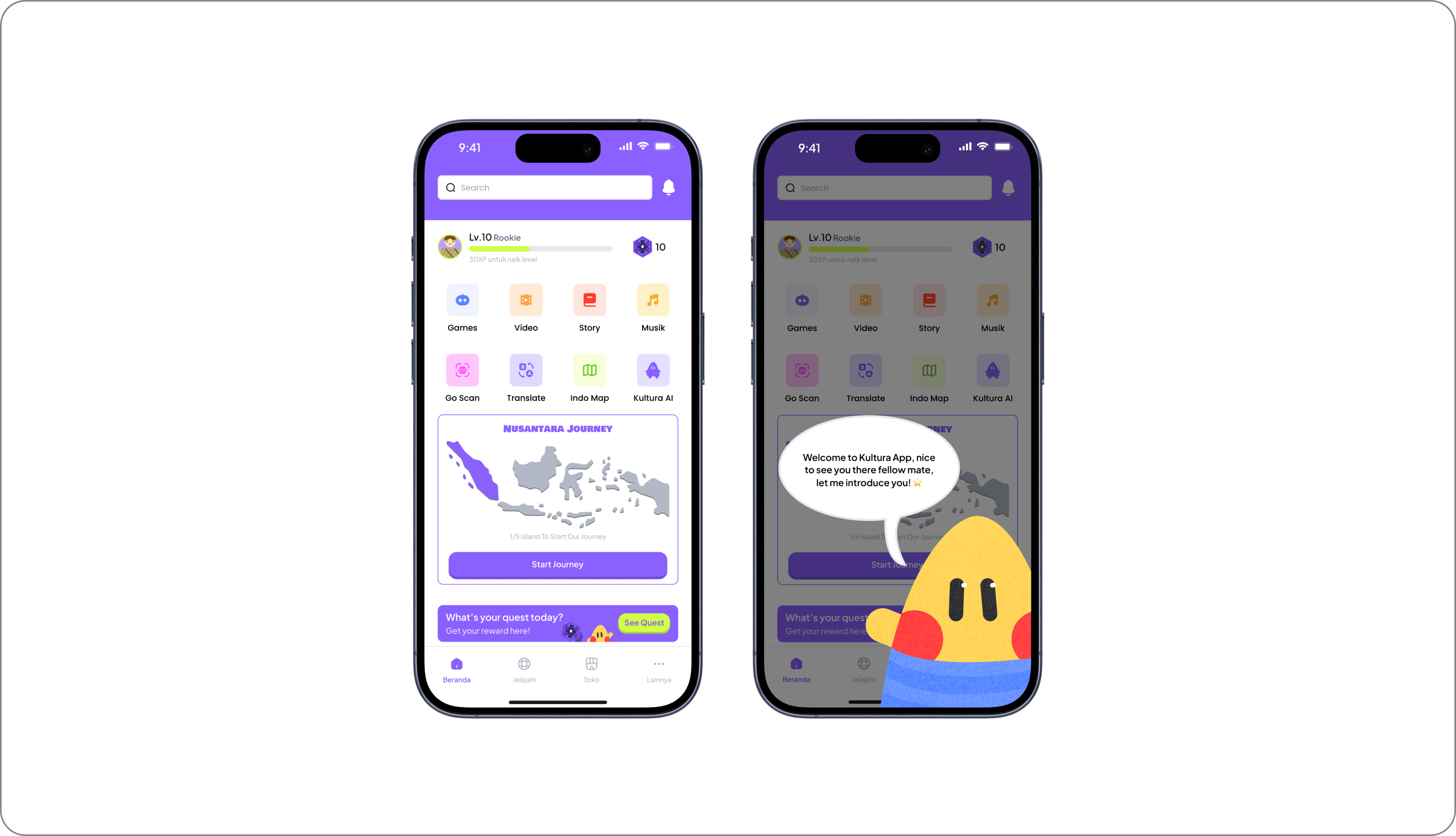
We designed Kultura's homepage together as an intuitive gateway displaying cultural categories, featured content, and personalized recommendations. My contribution included creating a responsive layout with cultural motifs that enhance visual identity while maintaining clean navigation paths for users at different digital literacy levels.
2. Game
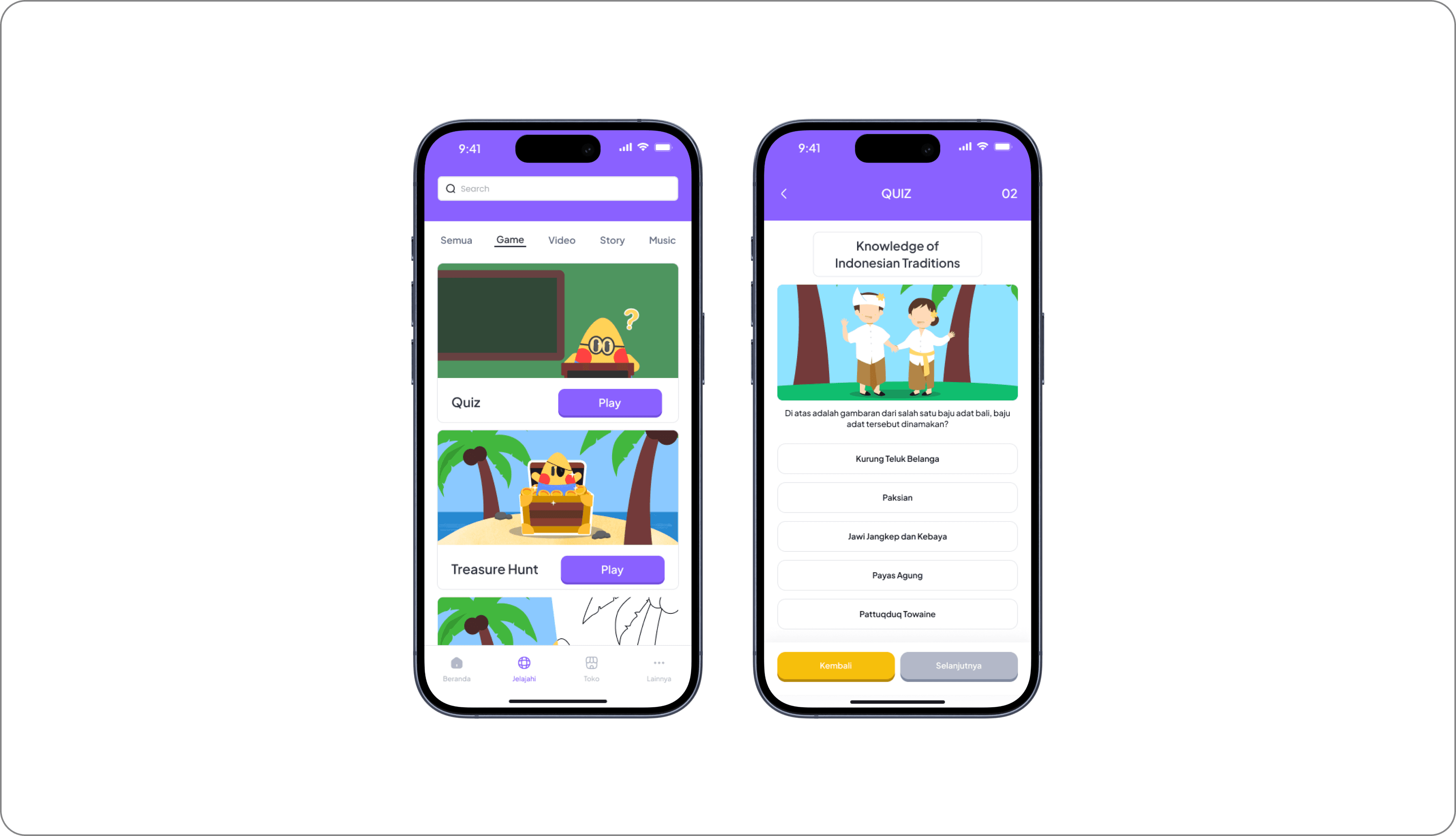
For the Quiz feature, We designed an interactive assessment system with culturally relevant question formats and visual feedback mechanisms. I incorporated gamification elements like progress indicators, achievement badges, and customizable difficulty levels to enhance engagement while educating users about cultural heritage.
3. Traditional Folktale
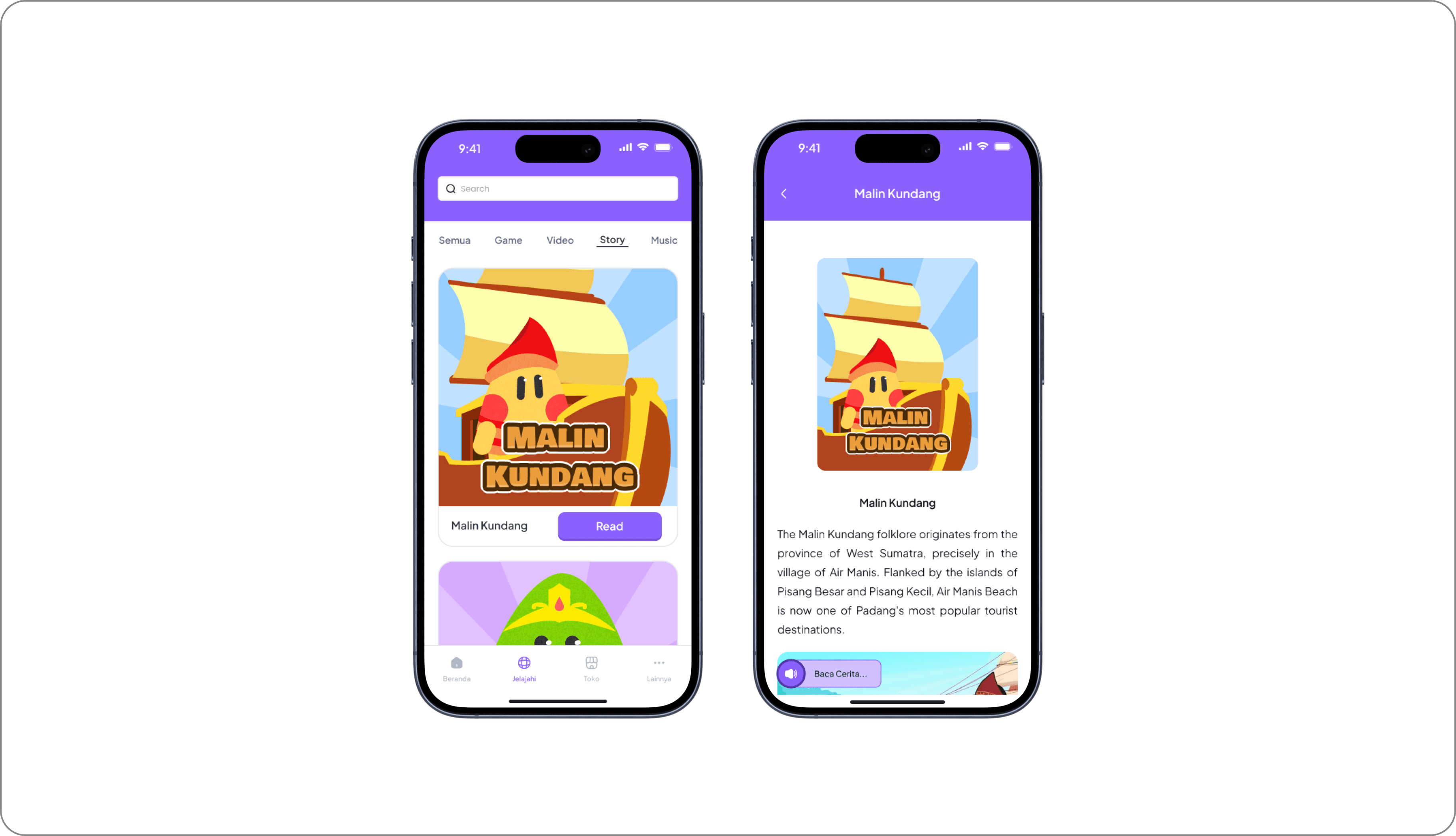
I designed the Folktale interface with an immersive reading experience that respects traditional storytelling. My contribution included developing a custom pagination system that mimics physical storytelling artifacts, integrating regional art styles into illustrations, and creating accessible bookmarking functions for continued exploration.
4. Video
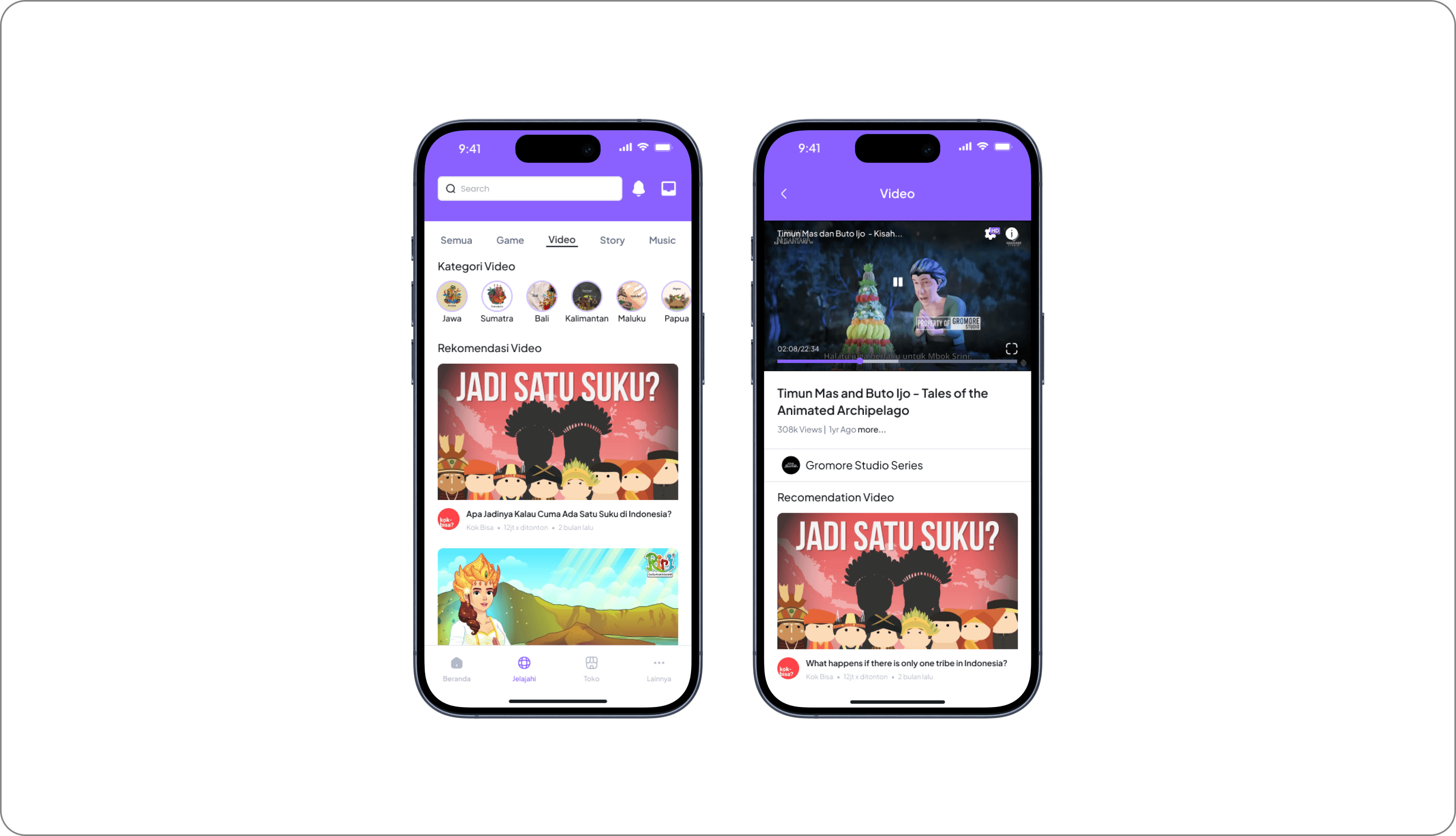
For the video section, We design a custom media player that contextualizes cultural performances with supplementary information. I designed interactive timestamps, cultural reference tooltips, and category filtering systems that allow users to explore related ceremonies and traditions.
5. Kultura Scan
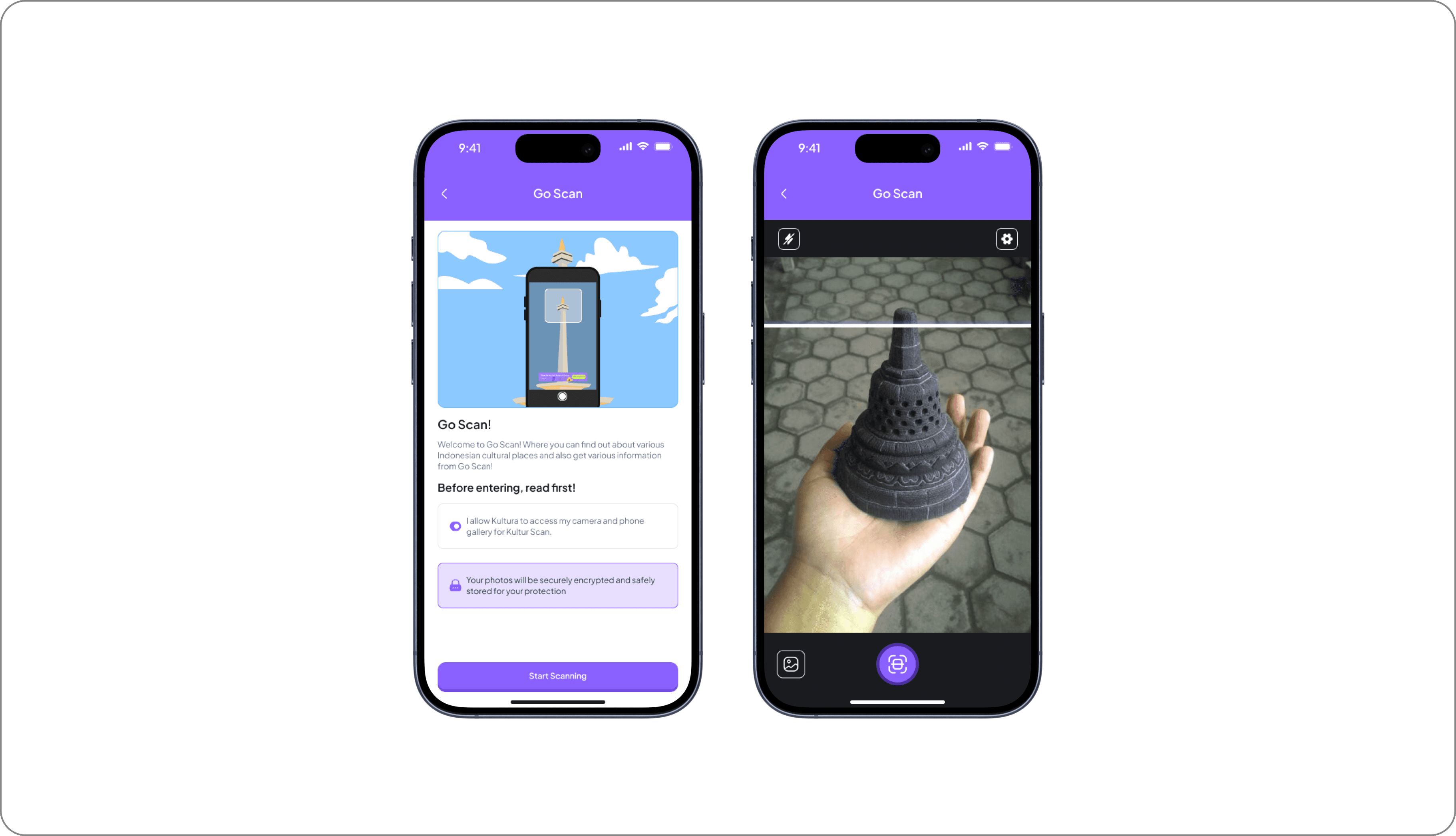
Kultura Scan lets users scan heritage-related objects like traditional toys, souvenirs, and landmarks. If the object is not related to heritage, the scan will not work. This helps users focus only on real cultural items.
Kultura AI
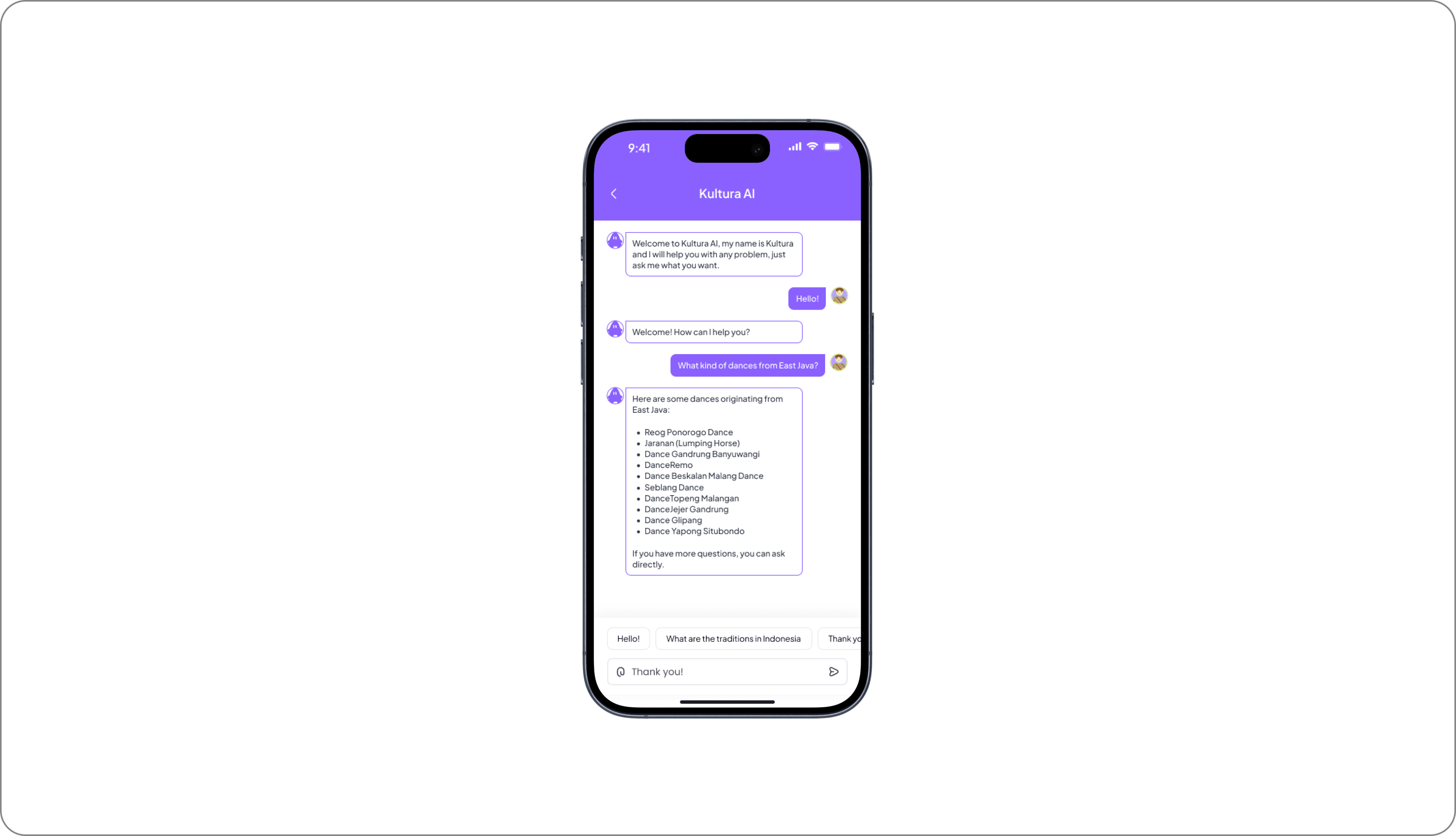
Kultura AI helps explain cultural topics more clearly. If users have questions about history, traditions, or local customs, Kultura AI provides simple and useful answers.
Traditional Music
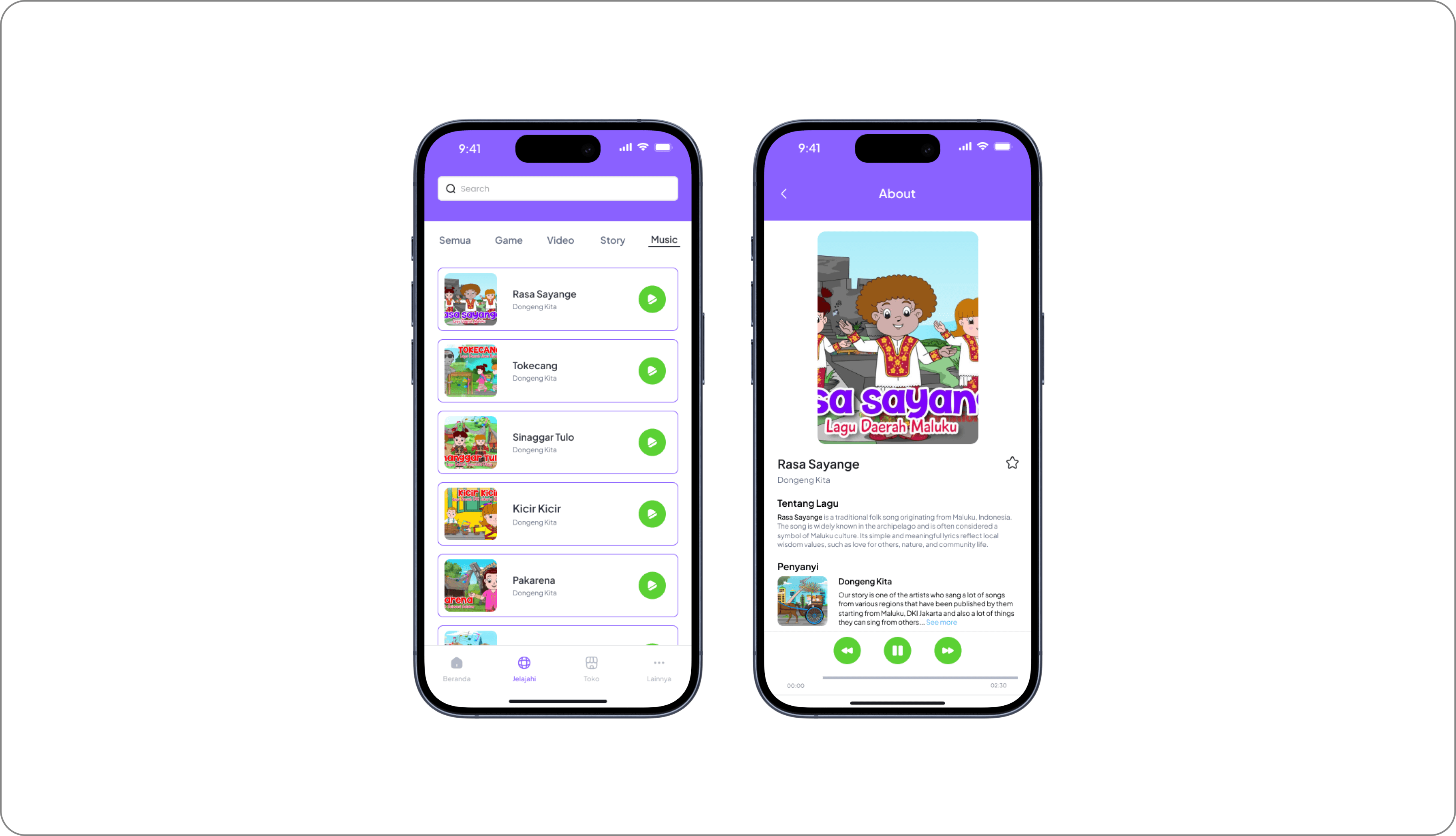
I designed the music player with visual representations of traditional instruments and regional styles. My contribution included creating interactive waveform visualizations, instrument identification features, and contextual information panels that explain cultural significance during playback.
Explore Indonesia
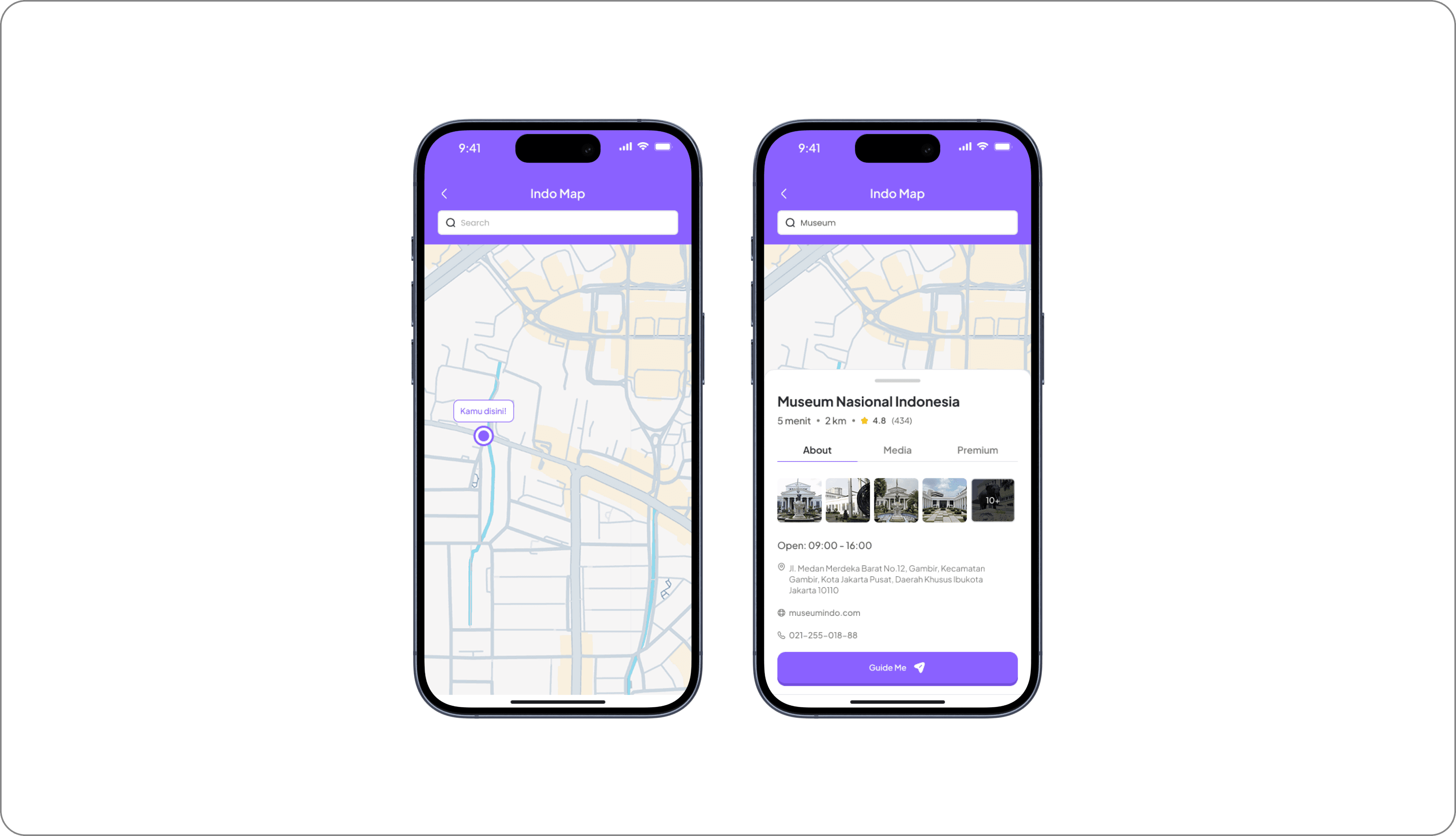
Explore Indonesia is a digital map where users can find historical places, museums, and cultural sites nearby. It makes discovering Indonesia’s rich culture easy and fun.
Translator
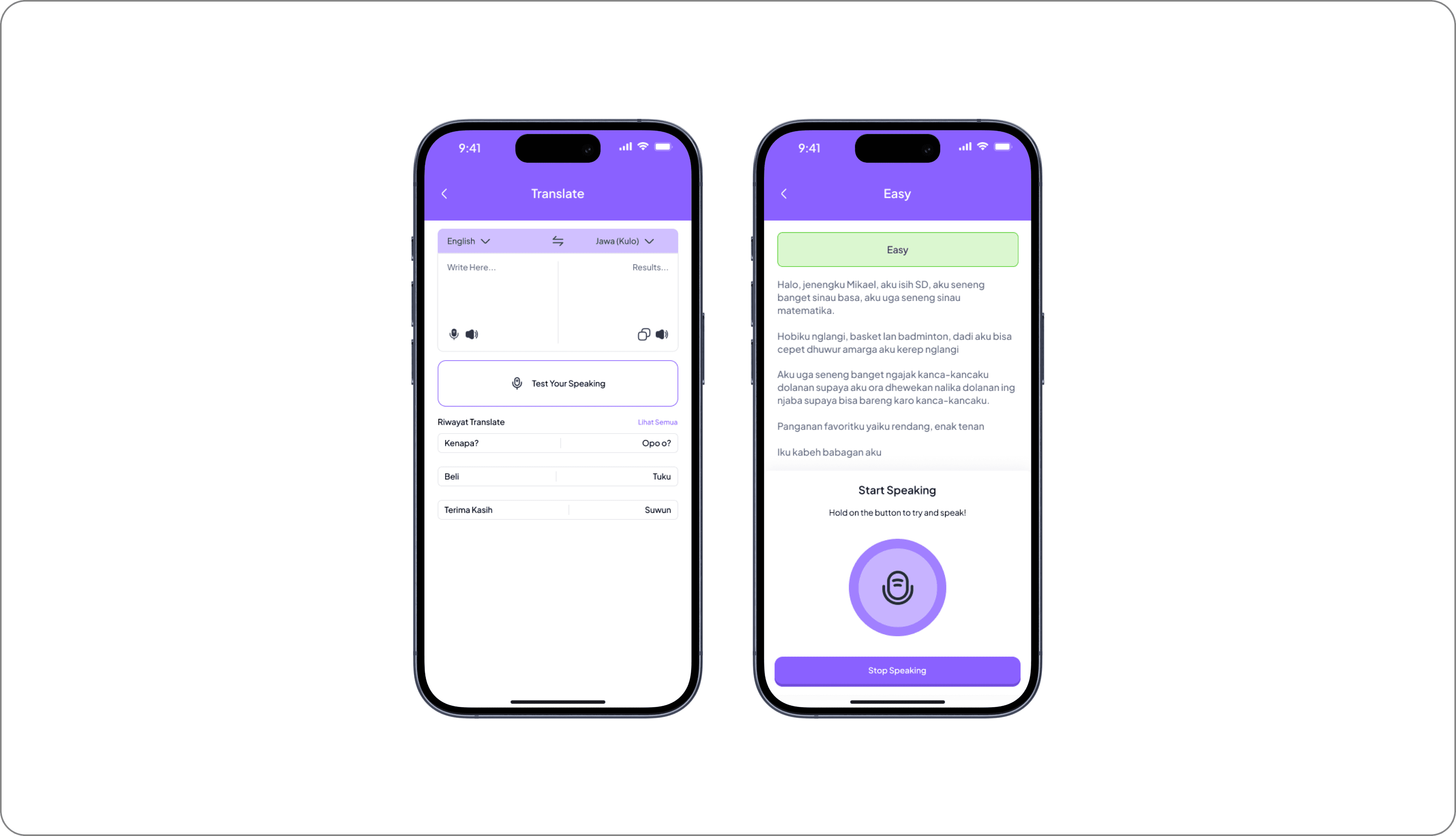
Culture Translator translates cultural languages and helps with speaking practice. Users can listen, learn, and improve their pronunciation of traditional words and phrases.
Reflection
Outcome & Impact
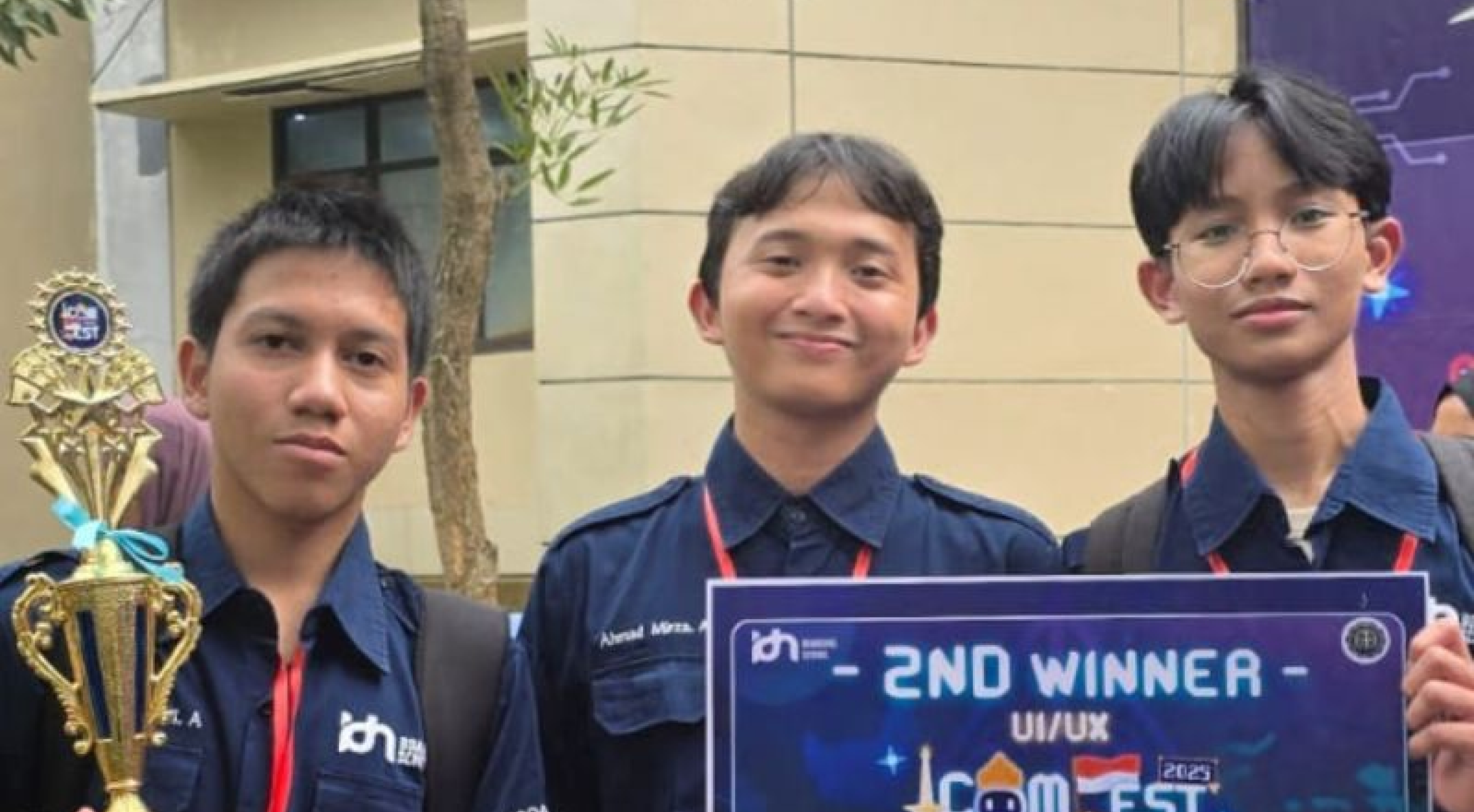
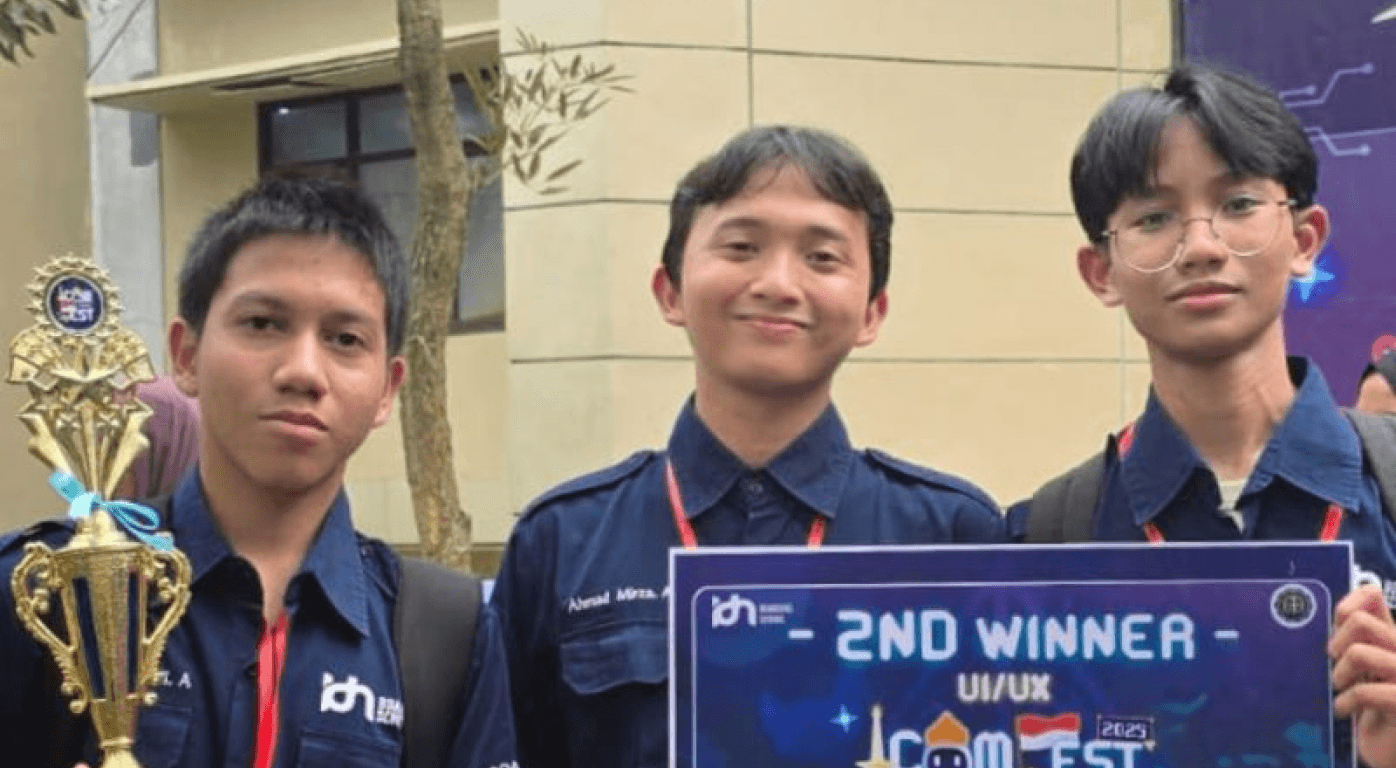
Kultura has proven that innovative design and intuitive user experience can increase children's interest in learning about Indonesian culture. By winning 2nd place at ICOMFEST 2025, this recognition shows that the solution we developed is not only unique but also makes a real impact in cultural education.
From the test results, 95% of users stated that Kultura's design is easier to use than other platforms, proving the effectiveness of the inclusive design approach applied. With interactive features such as Kultura Scan, Explore Indonesia, and Culture Translator, the platform successfully increases user engagement in exploring culture in a more fun and relevant way.
Furthermore, the community plays an important role in Kultura's success. By encouraging user engagement through interactive features and personalized experiences, Kultura is not only a learning tool but also a bridge to connect the younger generation with their cultural roots.
Key Takeaways
Simple and Inclusive Design Helps More People Use It
By making Kultura easy to use with clear navigation, fun visuals, and interactive experiences, more people feel comfortable exploring and learning about culture. A simple and inclusive design makes it easier for everyone to stay engaged.
Community Makes Learning More Meaningful
Kultura isn’t just about learning—it’s about connecting. By working with local communities, cultural experts, and young people, we create a space where culture feels alive and real, not just something to study.
Listening to Users Makes a Better Product
We made sure to test and improve Kultura by listening to users. Their feedback helped us create something truly useful and enjoyable. Research and testing are key to building a digital product that really works for people.
Kultura - Preserving Culture through Interactive Learning
Kultura is an application that helps children or teenagers to be enthusiastic about learning culture with parental control. This application also has various unique features such as: games, videos, stories, etc. This application will help children and teenagers enthusiastic about learning Indonesian culture.
Date
January 2025
Software Used
Figma
Overview
Why We Build Kultura?
We created Kultura because the competition caught our attention, not only as a platform to show our UI/UX skills, but also because of its challenging theme. Culture is often perceived as “old” and less appealing to the younger generation, so we wanted to prove that with the right design approach, culture can be fun, interactive, and relevant. Moreover, it was a chance for us to innovate, combine technology with cultural education, and-of course-challenge ourselves in a prestigious competition like ICOMFEST 2025.
Team And Role
As a core team member, I played a significant role in conceptualizing, designing, and refining Kultura. My key contributions included:
User Research & Persona Development: Ensuring our solution was data-driven and user-focused.
UI/UX Design Execution: Leading the interface design process to ensure aesthetic and functional consistency.
Presentation & Strategy: Showcasing our work in a compelling manner during the competition.
This project honed my skills in digital design, collaboration, and strategic problem-solving, further strengthening my expertise in creating impactful user experiences.
Research
Problem Statement
Many Indonesian children are less interested in learning about Indonesian culture because the learning methods seem boring and not in line with their interests. They are more often exposed to foreign cultures that look more attractive through media and technology. This can reduce the love and pride for local culture.
Research Methods
In the research process for Kultura, we applied the method of secondary research and surveys to dig deep insights into how users - especially the younger generation - interact with local culture in the digital era.
As an active collaborating team member, I contributed to crafting targeted research questions, analyzing findings from interviews and surveys, and designing data-driven solutions that truly address user needs. This approach not only improved Kultura's design quality, but also made the user experience more up-close and personalized, in line with the principle of human-centered design.
Key Findings
73% of users have difficulty finding local cultural events.
62% of cultural communities feel they have no digital space to showcase their work.
40% of users with disabilities experience barriers in navigating cultural platforms.
Obstacles to be Solved
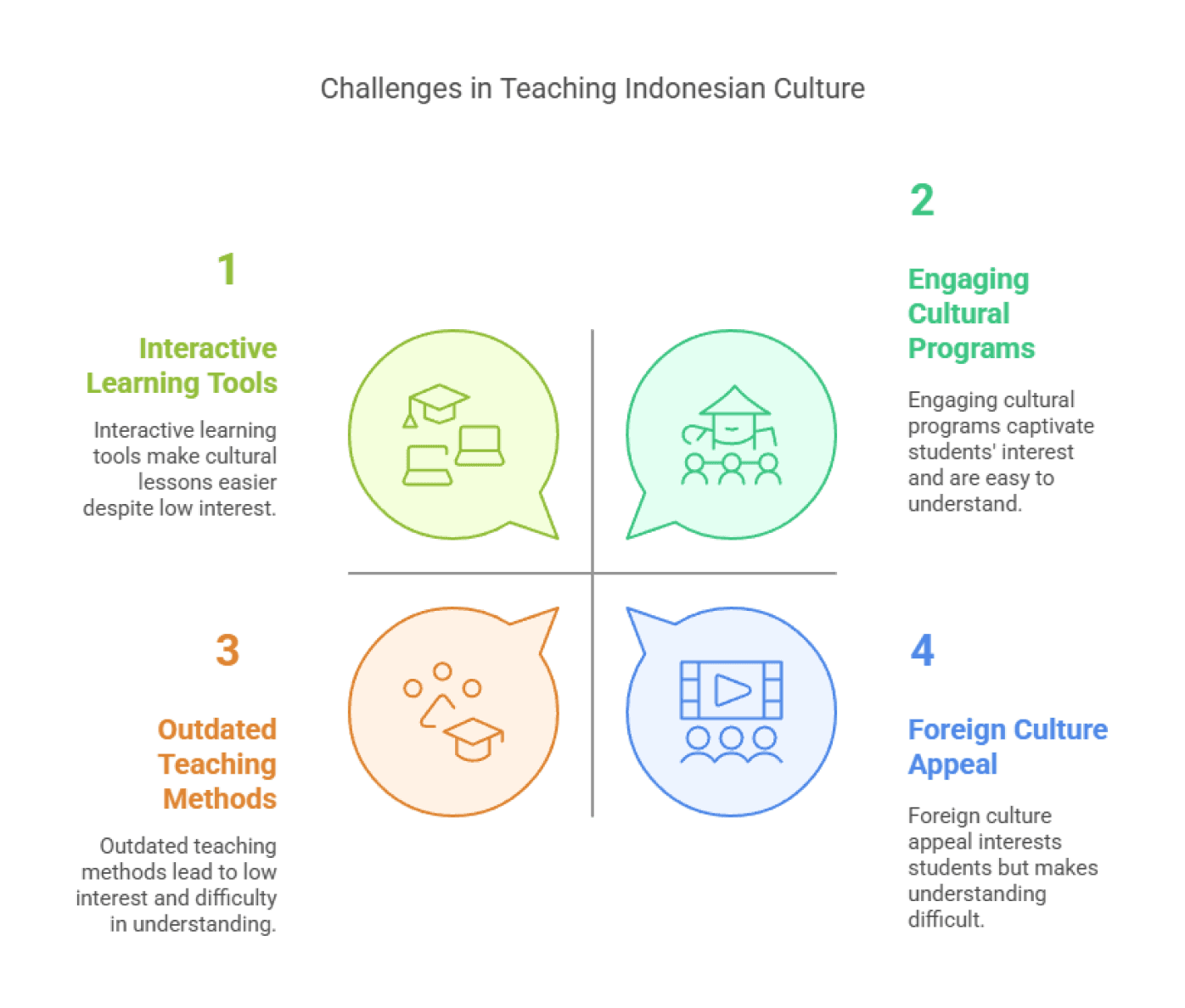
After identifying these pain points, the next step is to design a solution that is more engaging and relevant to students. I will discuss further to develop a cultural learning platform solution to make it more engaging to increase their interest and understanding.
Next steps to overcome cultural education challenges
In the process of identifying pain points, I contributed to formulating the main challenges faced by children in understanding and appreciating local culture. Some of the “How Might We” questions I found highlighted children's difficulties in accessing fun educational apps, limited time in using gadgets. By understanding these issues, we can explore targeted solutions to increase children's interest in Indonesian culture in a more modern way that suits their learning patterns.
Based on these pain points, the next step is to develop a solution that is not only effective but also engaging for users. Some of the ideas that have been designed include augmented reality features for immersive cultural exploration, gamification in the form of quizzes and daily streaks, as well as interactive features such as animated videos and webinars with cultural experts. I also contributed in designing digital safety features for children to learn and socialize safely. With a Design Thinking-based approach, we will enter into prototyping and early testing stages to ensure the developed solution really answers user needs optimally.
Ideation
Steps to realize the solution
Finally, we managed to design top features for Kultura, specifically designed to be relevant and engaging for children. We have discussed this feature and it will be very helpful for children and teenagers to be more motivated in learning Indonesian culture.
Translator
Game
Traditional Music
Folktale
Heritage Scan
Video
Explore Indonesia
Kultura AI
Creating the user flow
After designing the features, the next step was to develop a user flow to ensure a smooth user experience. The user flow helps us map out how children will interact with the app, from opening the app, selecting features, to achieving key objectives such as learning local languages, exploring cultural stories, or playing interactive games.
Design
Wireframe
I collaborated with the team to structure the entire digital experience, designing a comprehensive framework that connects the homepage with our core educational features: Cultural Interpreter, Folklore Center, and Heritage Scan. During this process, I was responsible for refining the user flows that guided the development of our wireframes, ensuring each feature truly met user needs and created intuitive pathways. My contributions helped turn abstract concepts into concrete user journeys that formed the foundation of our final design.
High-Fidelity Design
I collaborated on creating high-fidelity designs for our cultural education platform, transforming wireframes into polished, interactive experiences. Working in Figma, I developed detailed designs for key sections including the game interface, traditional music player, video display, login page, homepage, and folktale hub.
I implemented our design system to maintain visual consistency while preserving each cultural element's unique character. Managing my time effectively was challenging, especially when balancing complex game components with simpler pages. I focused on prioritizing key user touchpoints and making cultural elements both accessible and engaging. The final designs successfully blended traditional cultural elements with modern digital interactions, creating an intuitive platform that respects heritage while being accessible to today's users.
Core Features
Based on the research, the platform features several key features designed to enhance users productivity without compromising their social experience:
1. Homepage
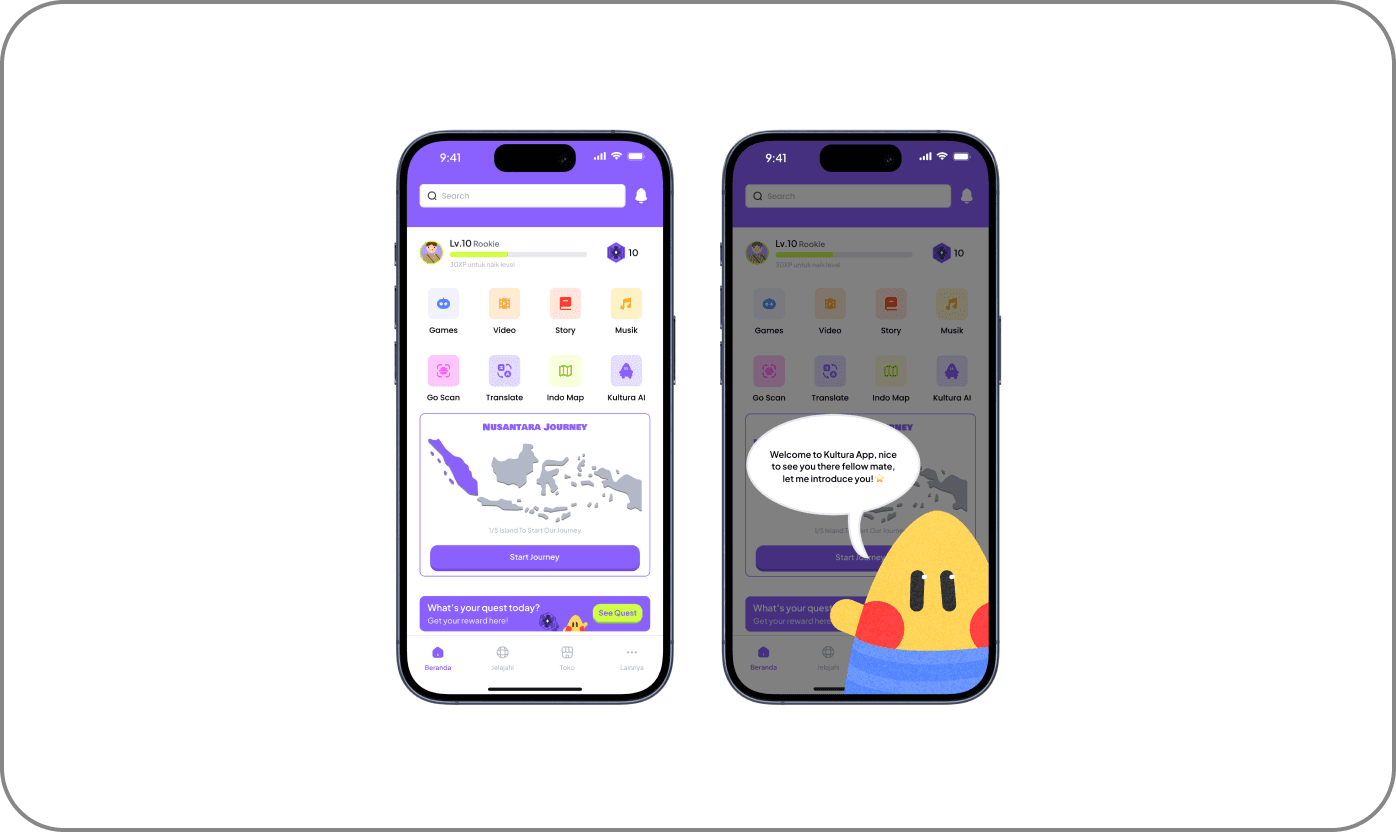
We designed Kultura's homepage together as an intuitive gateway displaying cultural categories, featured content, and personalized recommendations. My contribution included creating a responsive layout with cultural motifs that enhance visual identity while maintaining clean navigation paths for users at different digital literacy levels.
2. Game
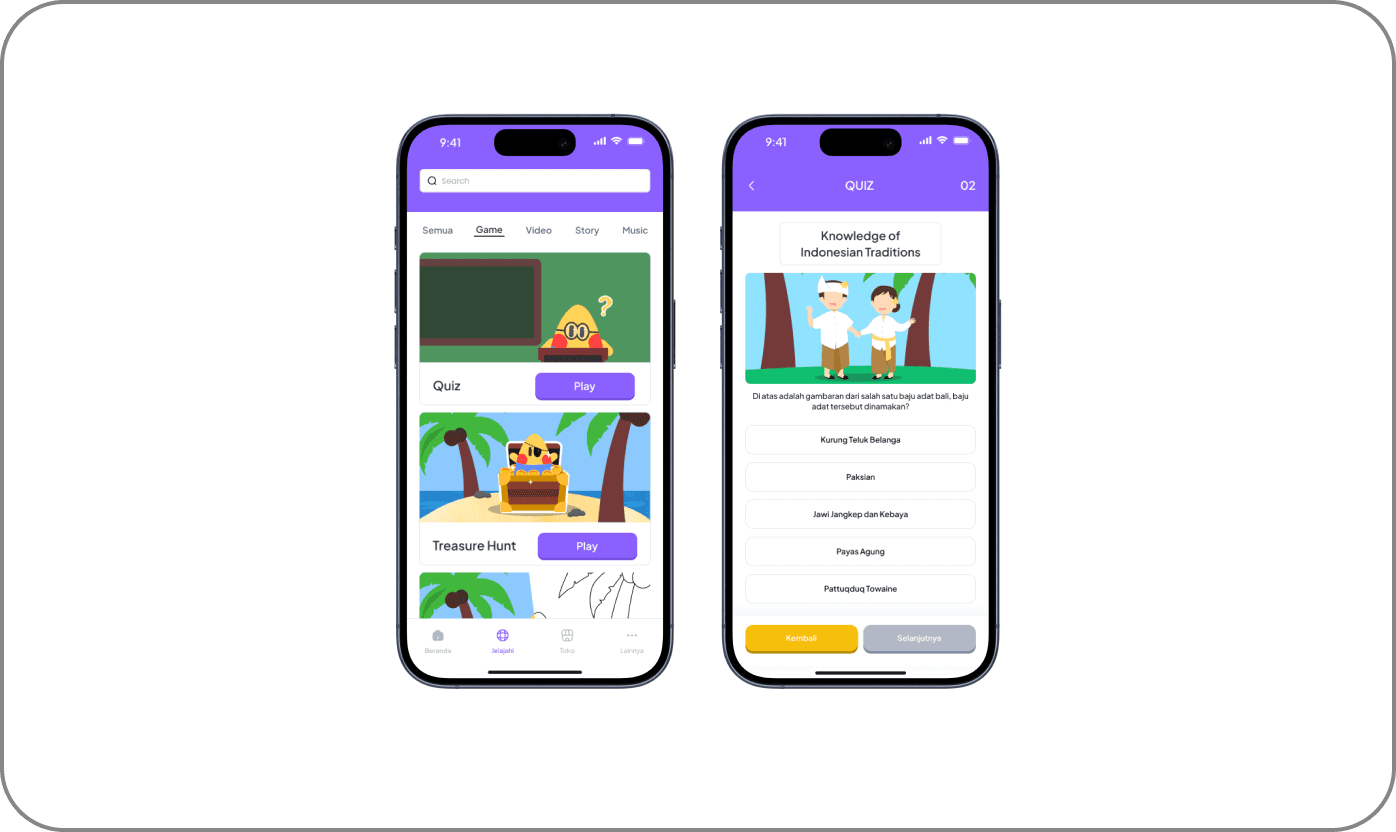
For the Quiz feature, We designed an interactive assessment system with culturally relevant question formats and visual feedback mechanisms. I incorporated gamification elements like progress indicators, achievement badges, and customizable difficulty levels to enhance engagement while educating users about cultural heritage.
3. Traditional Folktale
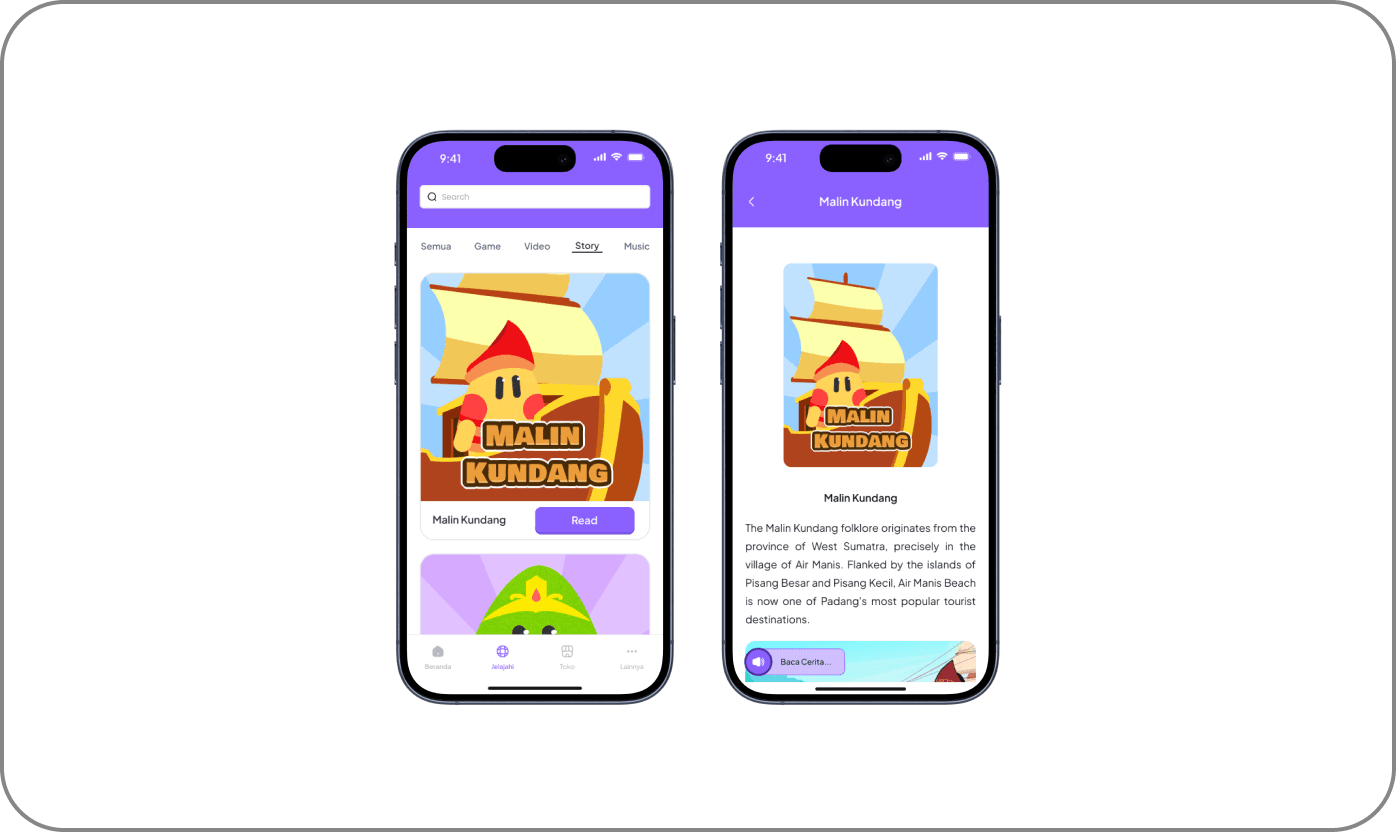
I designed the Folktale interface with an immersive reading experience that respects traditional storytelling. My contribution included developing a custom pagination system that mimics physical storytelling artifacts, integrating regional art styles into illustrations, and creating accessible bookmarking functions for continued exploration.
4. Video
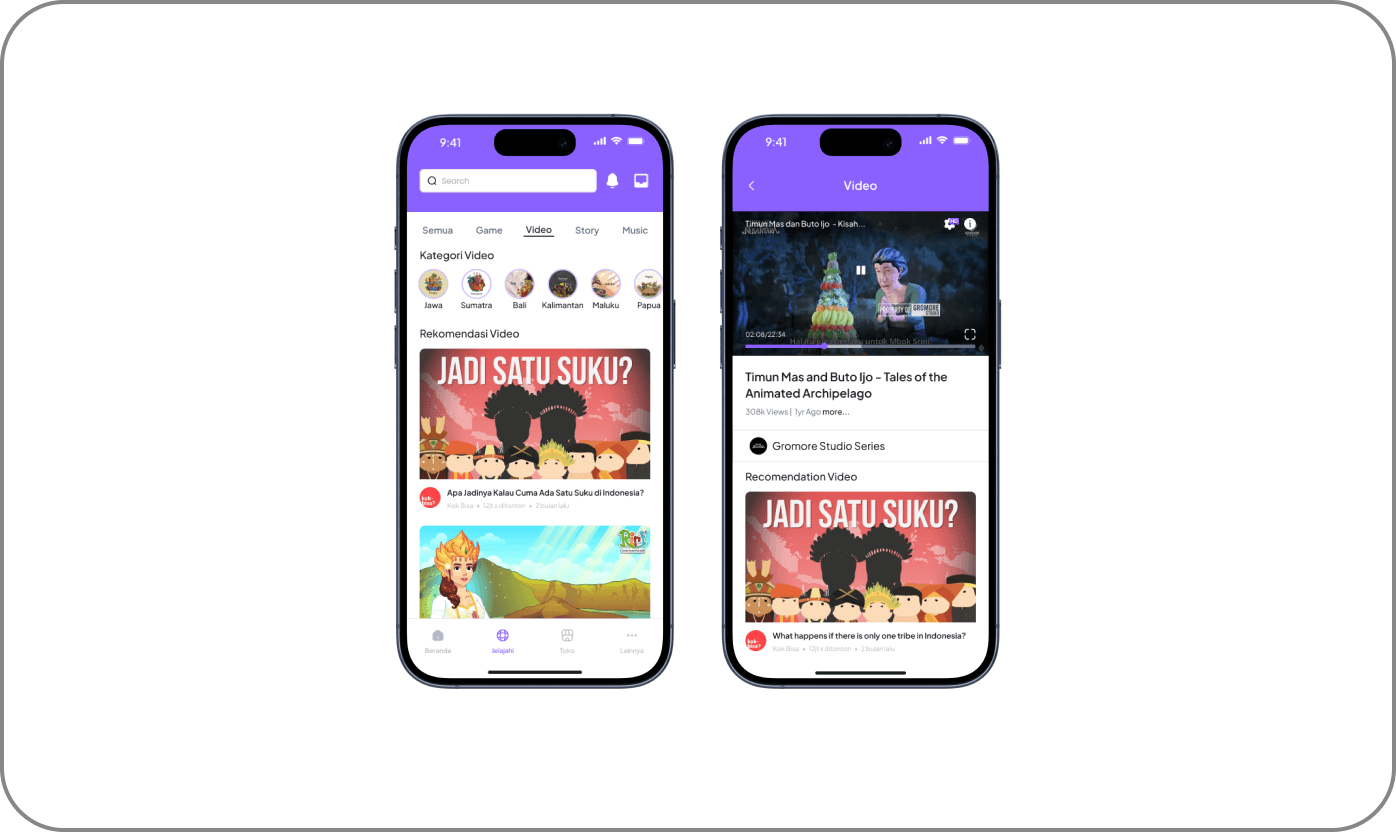
For the video section, We design a custom media player that contextualizes cultural performances with supplementary information. I designed interactive timestamps, cultural reference tooltips, and category filtering systems that allow users to explore related ceremonies and traditions.
5. Kultura Scan
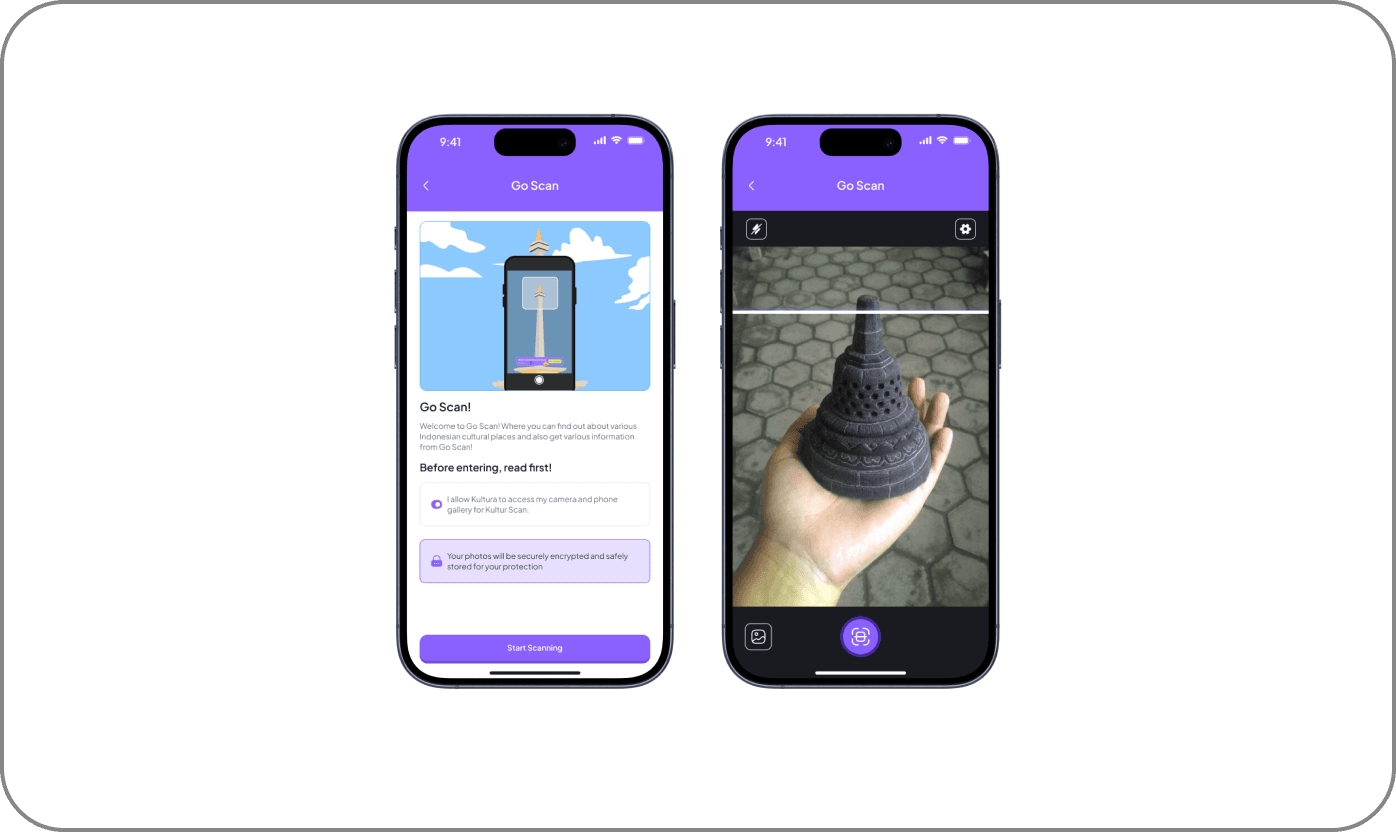
Kultura Scan lets users scan heritage-related objects like traditional toys, souvenirs, and landmarks. If the object is not related to heritage, the scan will not work. This helps users focus only on real cultural items.
Kultura AI
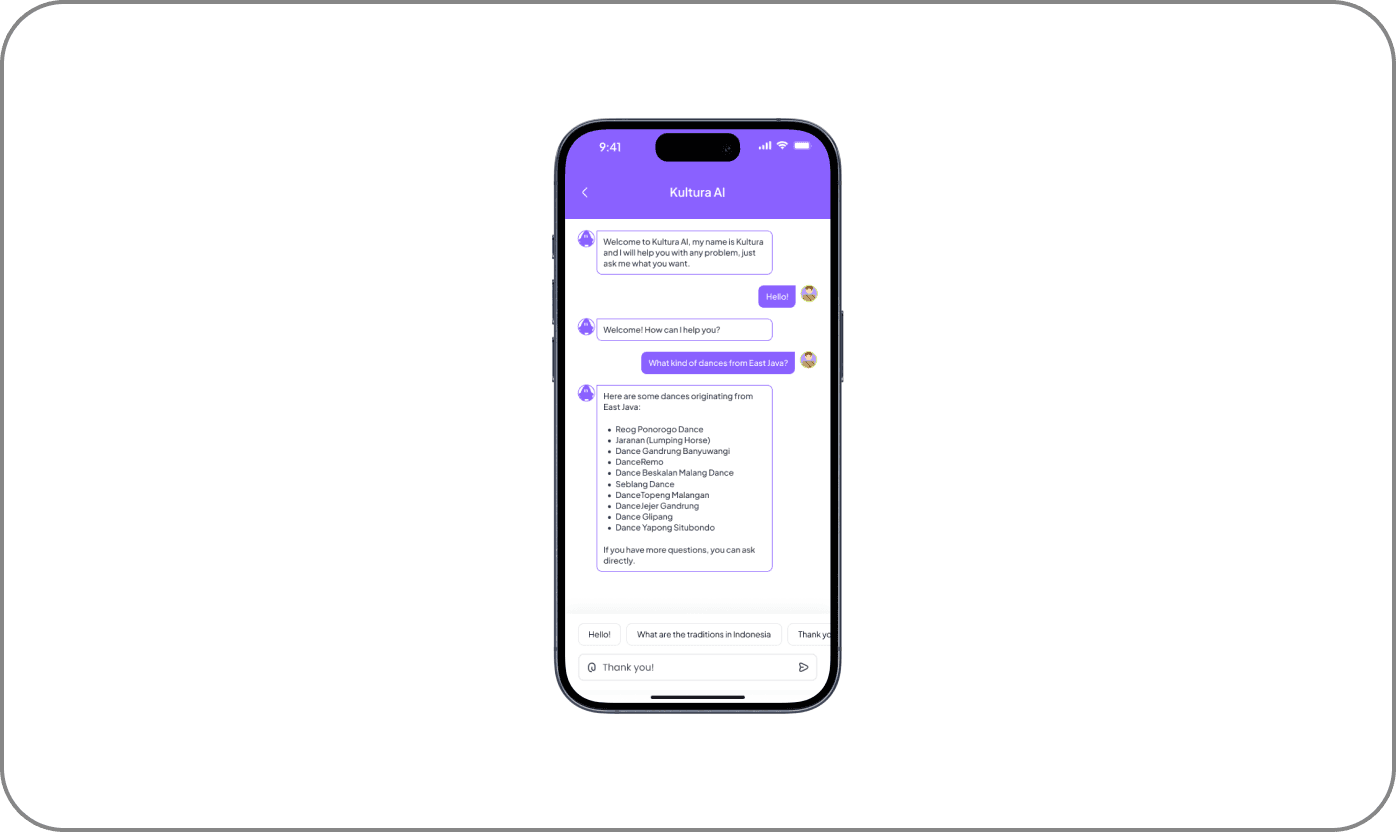
Kultura AI helps explain cultural topics more clearly. If users have questions about history, traditions, or local customs, Kultura AI provides simple and useful answers.
Traditional Music
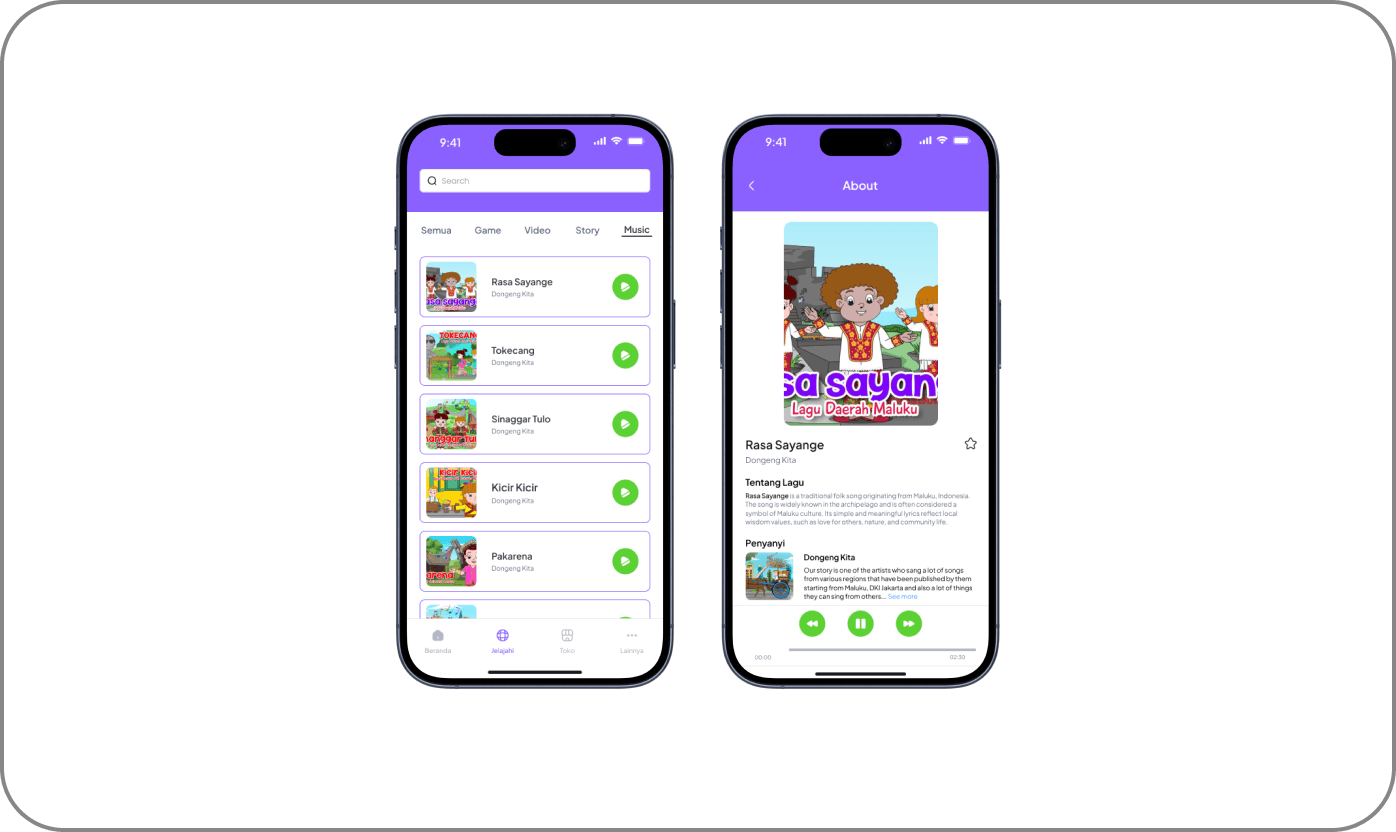
I designed the music player with visual representations of traditional instruments and regional styles. My contribution included creating interactive waveform visualizations, instrument identification features, and contextual information panels that explain cultural significance during playback.
Explore Indonesia
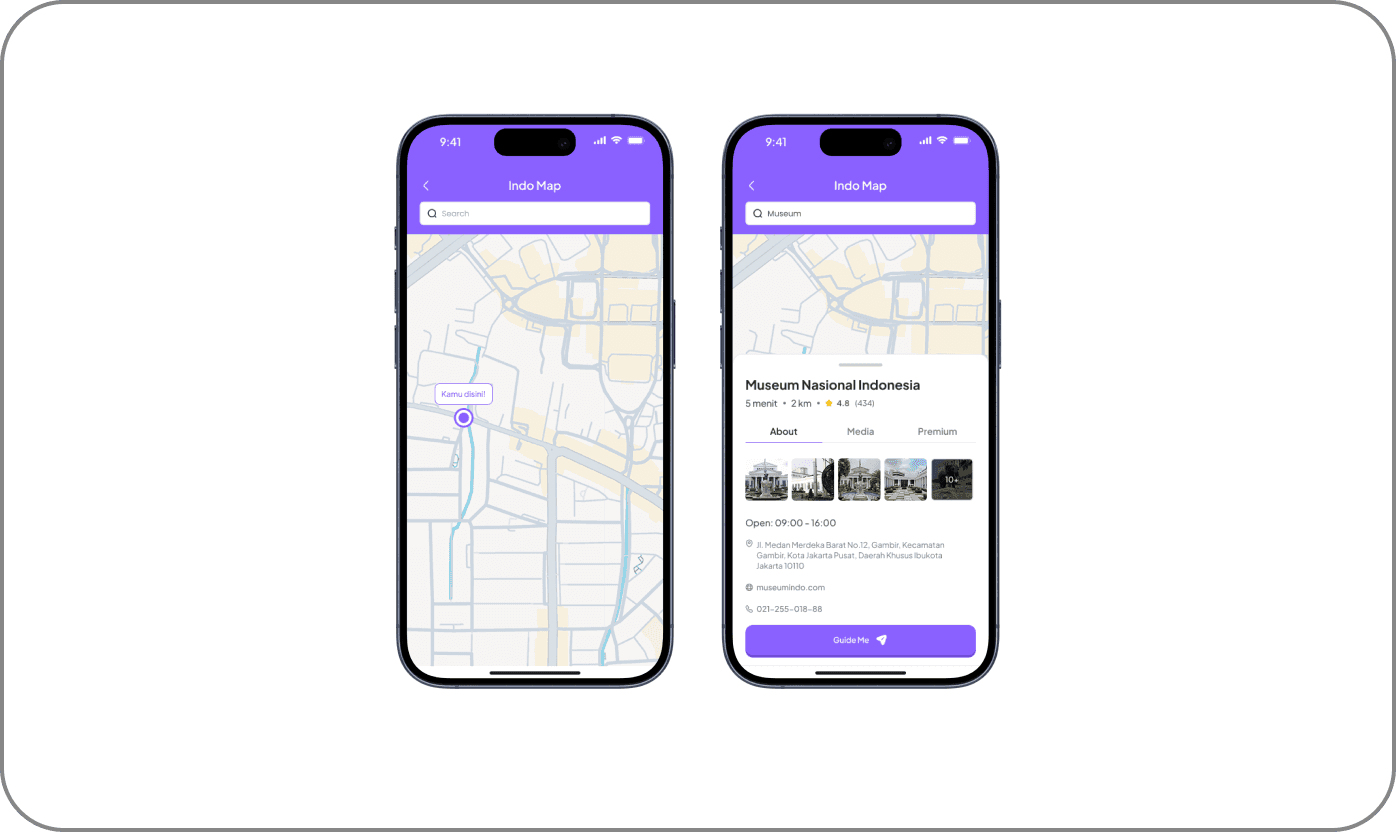
Explore Indonesia is a digital map where users can find historical places, museums, and cultural sites nearby. It makes discovering Indonesia’s rich culture easy and fun.
Translator
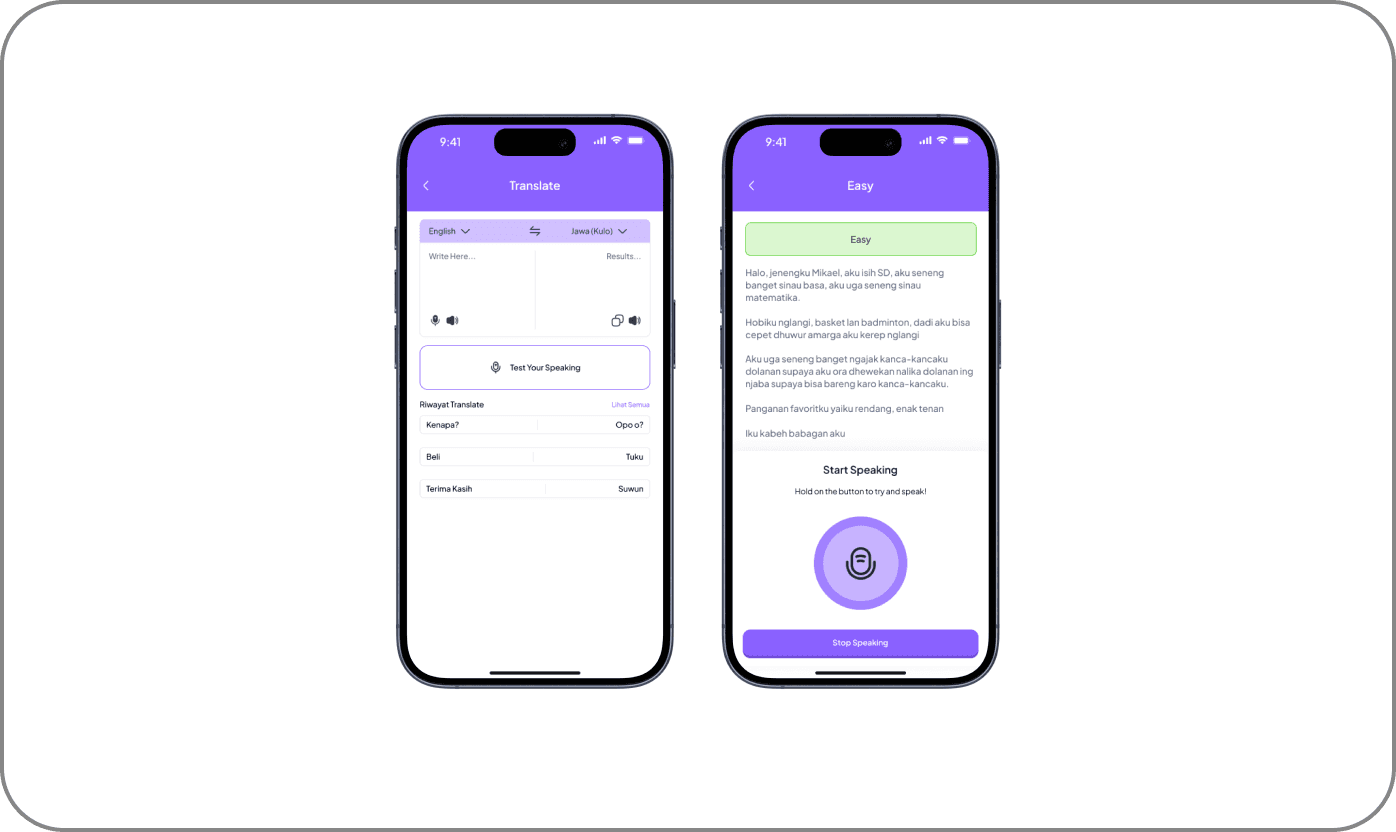
Culture Translator translates cultural languages and helps with speaking practice. Users can listen, learn, and improve their pronunciation of traditional words and phrases.
Reflection
Outcome & Impact
Kultura has proven that innovative design and intuitive user experience can increase children's interest in learning about Indonesian culture. By winning 2nd place at ICOMFEST 2025, this recognition shows that the solution we developed is not only unique but also makes a real impact in cultural education.
From the test results, 95% of users stated that Kultura's design is easier to use than other platforms, proving the effectiveness of the inclusive design approach applied. With interactive features such as Kultura Scan, Explore Indonesia, and Culture Translator, the platform successfully increases user engagement in exploring culture in a more fun and relevant way.
Furthermore, the community plays an important role in Kultura's success. By encouraging user engagement through interactive features and personalized experiences, Kultura is not only a learning tool but also a bridge to connect the younger generation with their cultural roots.
Key Takeaways
Simple and Inclusive Design Helps More People Use It
By making Kultura easy to use with clear navigation, fun visuals, and interactive experiences, more people feel comfortable exploring and learning about culture. A simple and inclusive design makes it easier for everyone to stay engaged.
Community Makes Learning More Meaningful
Kultura isn’t just about learning—it’s about connecting. By working with local communities, cultural experts, and young people, we create a space where culture feels alive and real, not just something to study.
Listening to Users Makes a Better Product
We made sure to test and improve Kultura by listening to users. Their feedback helped us create something truly useful and enjoyable. Research and testing are key to building a digital product that really works for people.
Back to Works